Key points
- Best straight stitch: the gear-driven 201 (ISMACS: considered by most collectors Singer’s best).
- Best simple workhorse: the 15-91, 66 or 99.
- Best portable: the 221 Featherweight (lightest) or the 301 (full-size work area).
- Best zigzag: the 401A or 500A, with built-in or interchangeable cams.
- All-metal machines last, but they are not industrial: they sew denim, not heavy leather.
Our picksBest vintage Singers by use
| Use | Model | Why |
|---|---|---|
| Best overall straight stitch | 201-2 / 201K | Rotary hook, gear drive, very smooth; ‘the best sewing machine Singer ever made’ to most collectors |
| Simple workhorse | 15-91 | Gear-driven potted motor, common parts, Class 15 bobbin |
| Treadle or hand crank | 66 / 99 | Drop-in bobbin, easy to thread, made for decades |
| Lightest portable | 221 Featherweight | About 11 lb, beloved by quilters |
| Full-size portable | 301 | Slant needle, bigger work area |
| Zigzag and decorative | 401A, 500A | Built-in stitches plus extra top-hat cams |
Why vintageWhy choose a mechanical vintage Singer?
These machines are mechanical: no circuit boards, mostly metal gears, and parts that a careful owner can clean, oil and adjust. Many have been sewing for 60 to 90 years. The trade-off is fewer stitches and more weight. If you want dozens of decorative stitches, automatic buttonholes or a needle threader, a modern machine is easier.
Heavy fabricAre vintage Singers heavy-duty sewing machines?
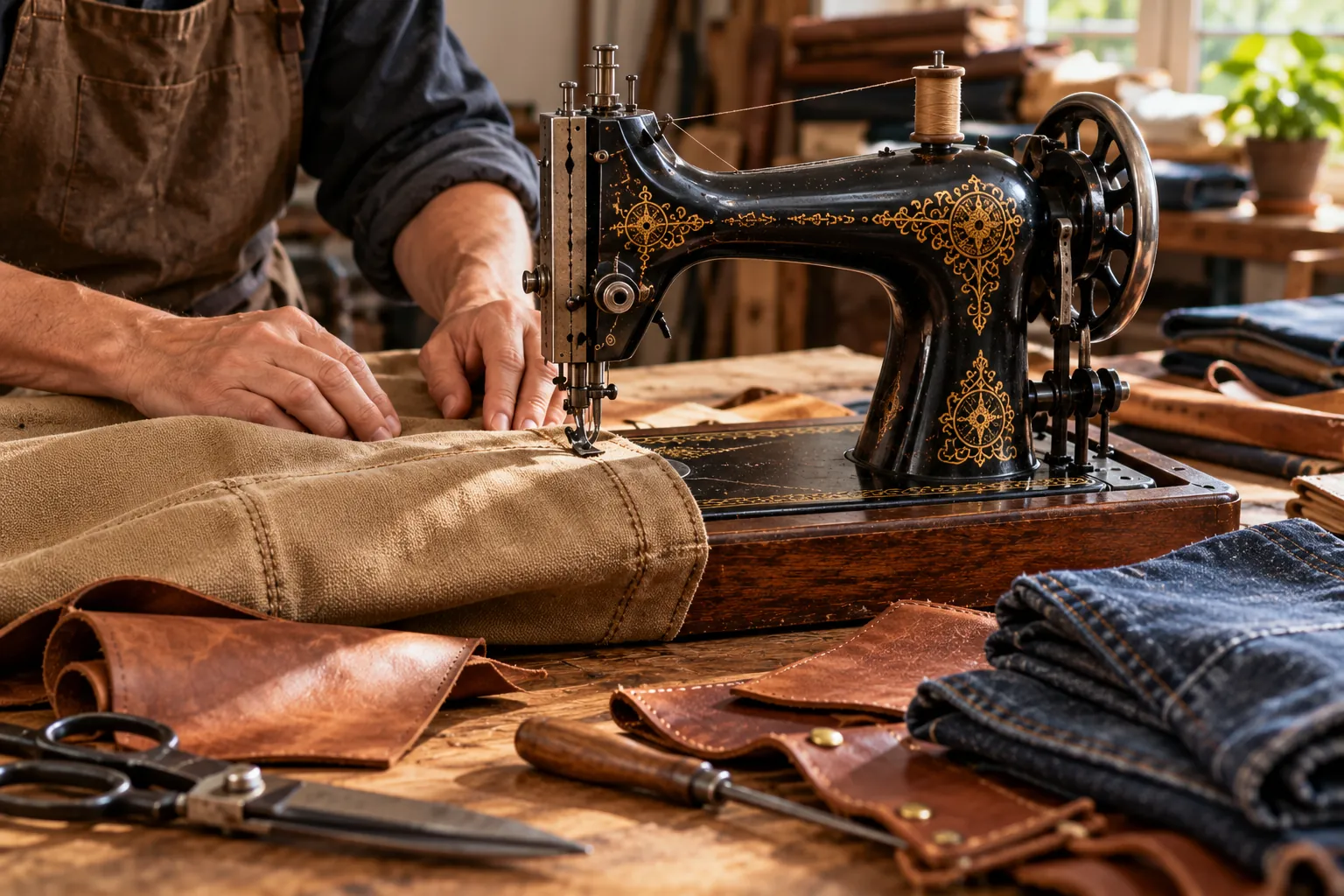
They are sturdier than most modern domestic machines, but they are household machines, not industrials. Owners report a 15-91 handling denim and a 201K stitching several layers of sailcloth, but leatherworkers put the practical limit around light leather. ISMACS notes the gear-driven 201 is very strong. Our guide to vintage Singers for leather and heavy fabric explains the limits.
CautionWhich vintage Singers to be careful with
From the mid-1960s some Singers use plastic or nylon gears: oldsewingear.com warns that black plastic gears on the 600-series Touch & Sew are prone to cracking with age. Check gears before you buy a later machine, and ask for a test stitch.
NextBefore you buy
Read our 12-point buying checklist, look up the serial number, and compare sold prices. For the two most-compared full-size machines, see Singer 201 vs 15-91.
QuestionsFrequently asked questions
What is the best vintage Singer sewing machine?
For straight stitching most collectors rate the 201 highest. The 15-91, 66, 99, 301 and Featherweight are also excellent; the 401A is the favourite zigzag model.
Are old Singer sewing machines good?
The all-metal models from the 1900s to early 1960s are durable and easy to service. Check wiring and test-sew before buying.
What is the best vintage zigzag sewing machine?
Among Singers, the 401A Slant-o-Matic with built-in cams, followed by the 500A and 403A.
Is a vintage Singer good for beginners?
Yes, if it has been serviced. Straight-stitch models are simple to use; threading and the bobbin need learning once.
Are vintage Singers better than new ones?
They are more durable mechanically; modern machines offer more stitches and conveniences.
ReferencesSources
These are the pages and manuals the facts in this article come from. Where they disagree, we say so in the text.
- ismacs.net/singer_sewing_machine_company/singer-class-201-sewing-machines.html
- www.singersewinginfo.co.uk/201
- www.oldsewingear.com/601--603-604.html
- www.wizcrafts.net/crafts/singer15-91.html
- forums.ybw.com/threads/which-singer-201.613588
- leatherworker.net/forum/topic/69317-singer-model-15-91good-for-leather-work
- en.wikipedia.org/wiki/Singer_Featherweight
Published 24 October 2026 · Written and fact-checked by the HeirloomID editors. Spotted an error? Tell us.