Key points
- Look for the maker’s stamp on the toe (front end).
- 18th-century planes: often 10 in long, flat chamfers; 19th-century: about 9½ in, rounded.
- New England makers often used yellow birch rather than beech.
- Transitional planes (Stanley, 1870 to as late as 1943) are common and cheap.
- Early named makers such as Nicholson and Chelor command premiums.
TypesTypes of wooden hand planes
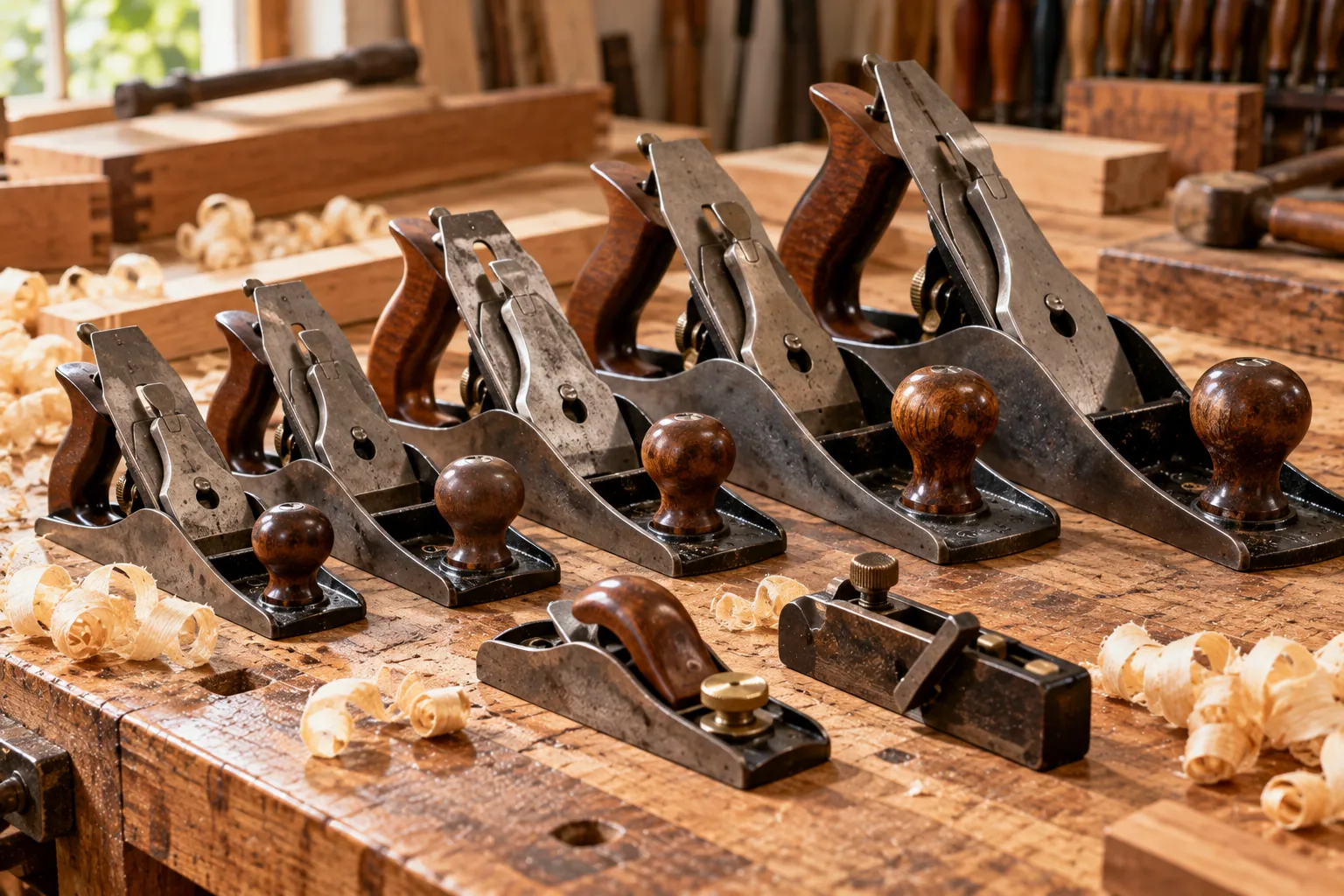
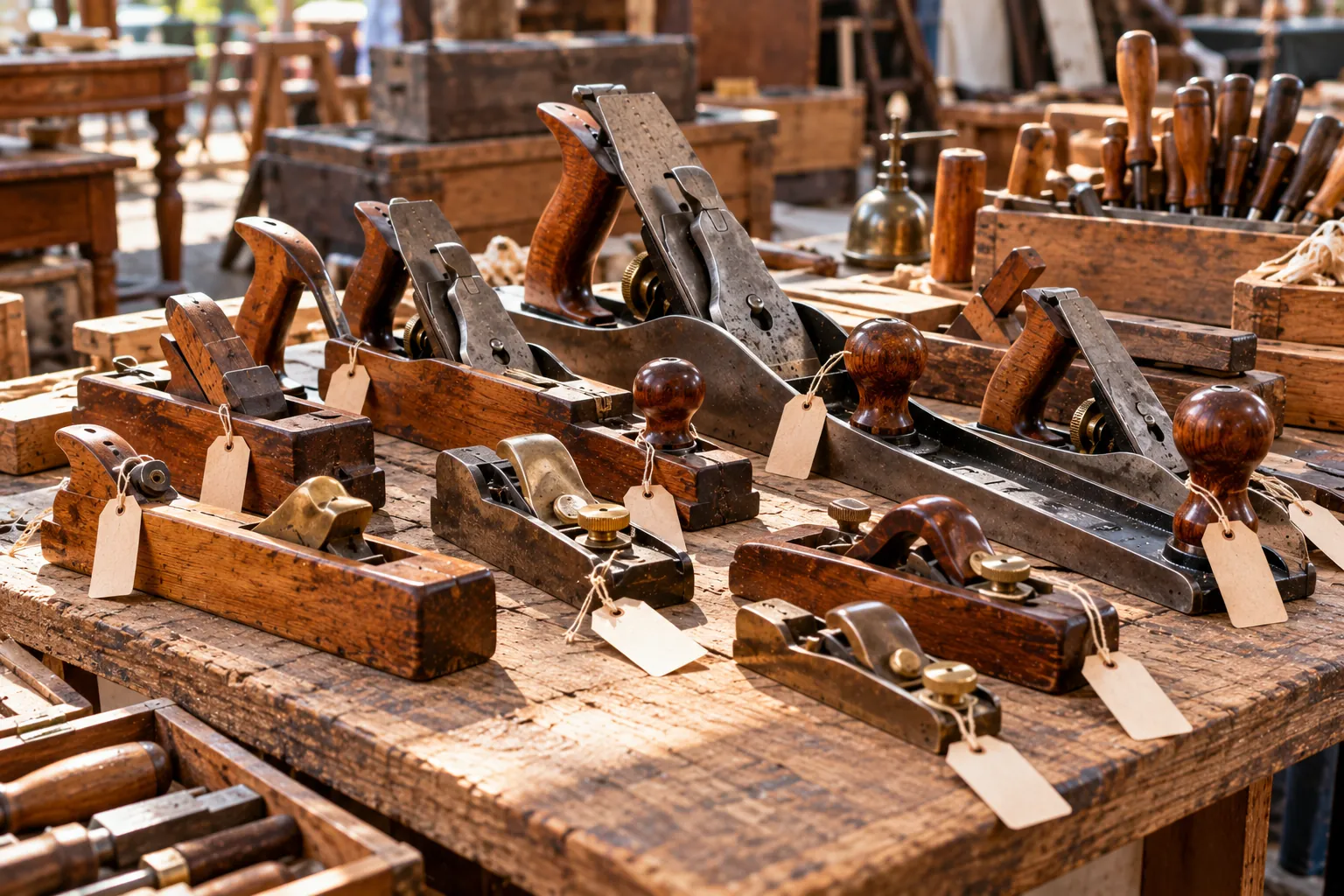
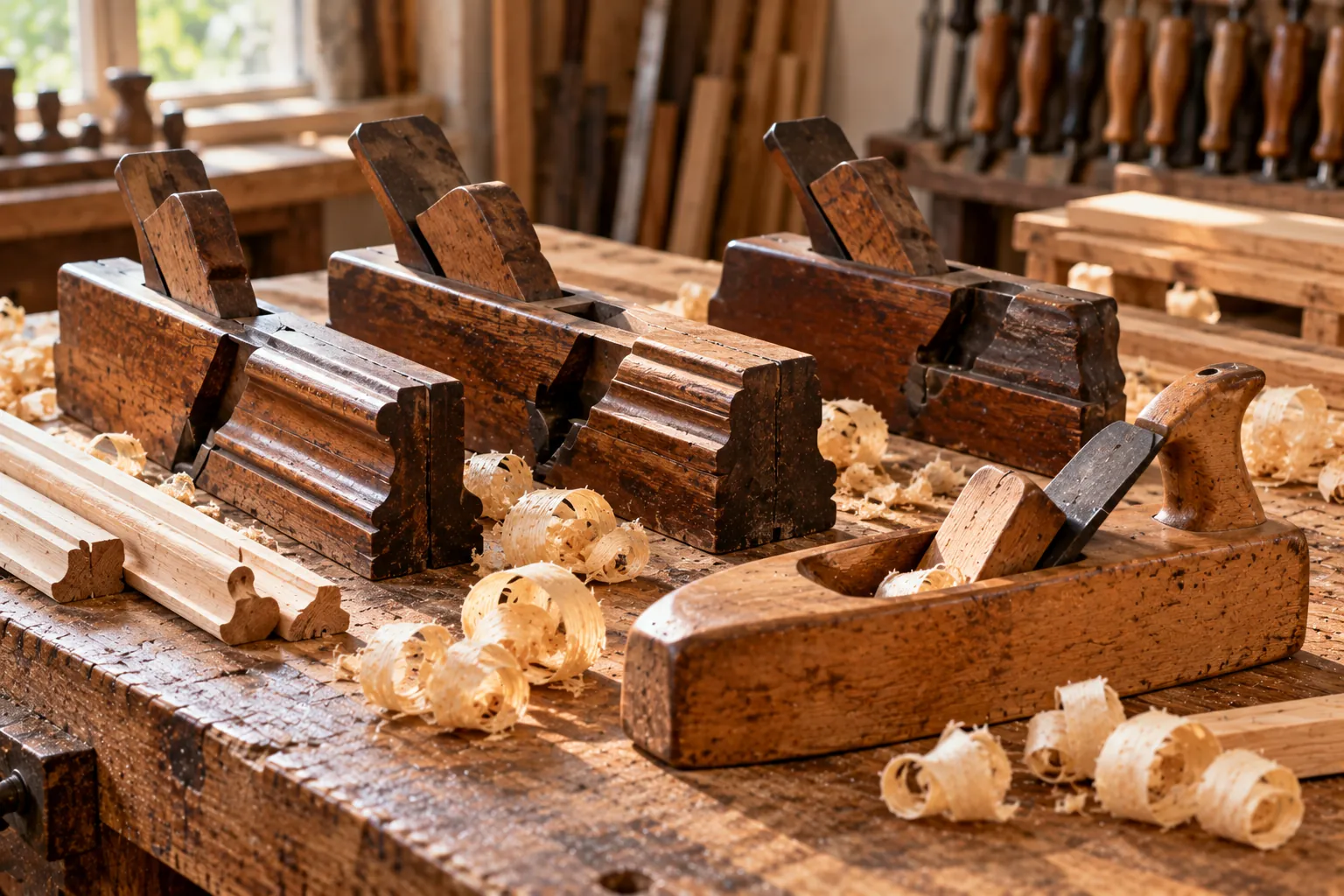
- Bench planes: smoothing plane (coffin-shaped), jack, try plane (a long plane for truing edges) and jointer.
- Moulding planes: narrow planes that cut a profile; Wikipedia notes they were made of hardwood, often beech or maple, with the iron held by a wooden wedge.
- Joinery planes: rabbet, plough, dado and fillister planes.
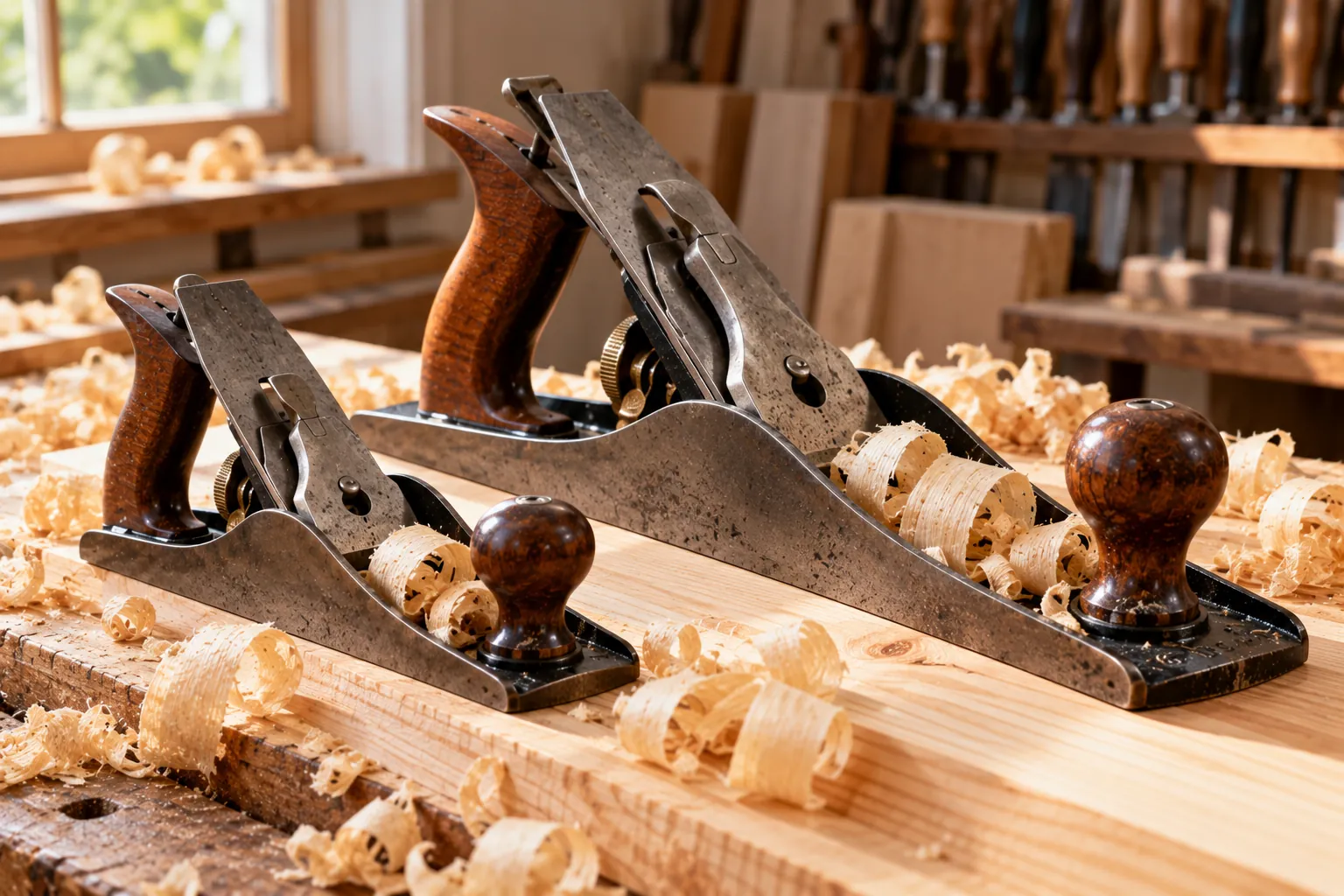
- Transitional planes: a wooden body with a metal casting holding the iron.
DatingHow to identify and date a wooden plane
Patrick Leach’s guide to 18th- and 19th-century American planes gives practical clues:
| Feature | 18th century | 19th century |
|---|---|---|
| Length (moulding planes) | Often about 10 in | About 9½ in |
| Chamfers | Flat chamfers (to about 1800) | Slight radius standard by about 1825 |
| Wood | New England makers often yellow birch | Mostly beech |
The maker’s name stamped on the toe can often be traced; Leach notes makers can be found in town records. Owners’ names were stamped too, so don’t confuse an owner’s stamp with a maker’s.
ValueWhich wooden planes are valuable?
Most 19th-century moulding and bench planes were made in large numbers and are affordable user tools. The exceptions are early or famous makers: Leach calls Francis Nicholson of Wrentham, Massachusetts, America’s first documented planemaker, and says his planes still command a premium. Popular Woodworking describes the planes of Cesar Chelor, who worked for Nicholson and was freed by his will, as among the best-known and most valuable antique wooden planes on the market.
TransitionalStanley transitional planes
Stanley’s transitional planes screw a cast-iron frame and Bailey-style adjuster onto a beech body. Leach dates model years from 1870 to as late as 1943, calls them very cheap, and recommends them for practising restoration; worn soles are the commonest fault. For all-metal Stanleys, see our Stanley plane guide and types of hand planes.
UsingUsing a wooden plane
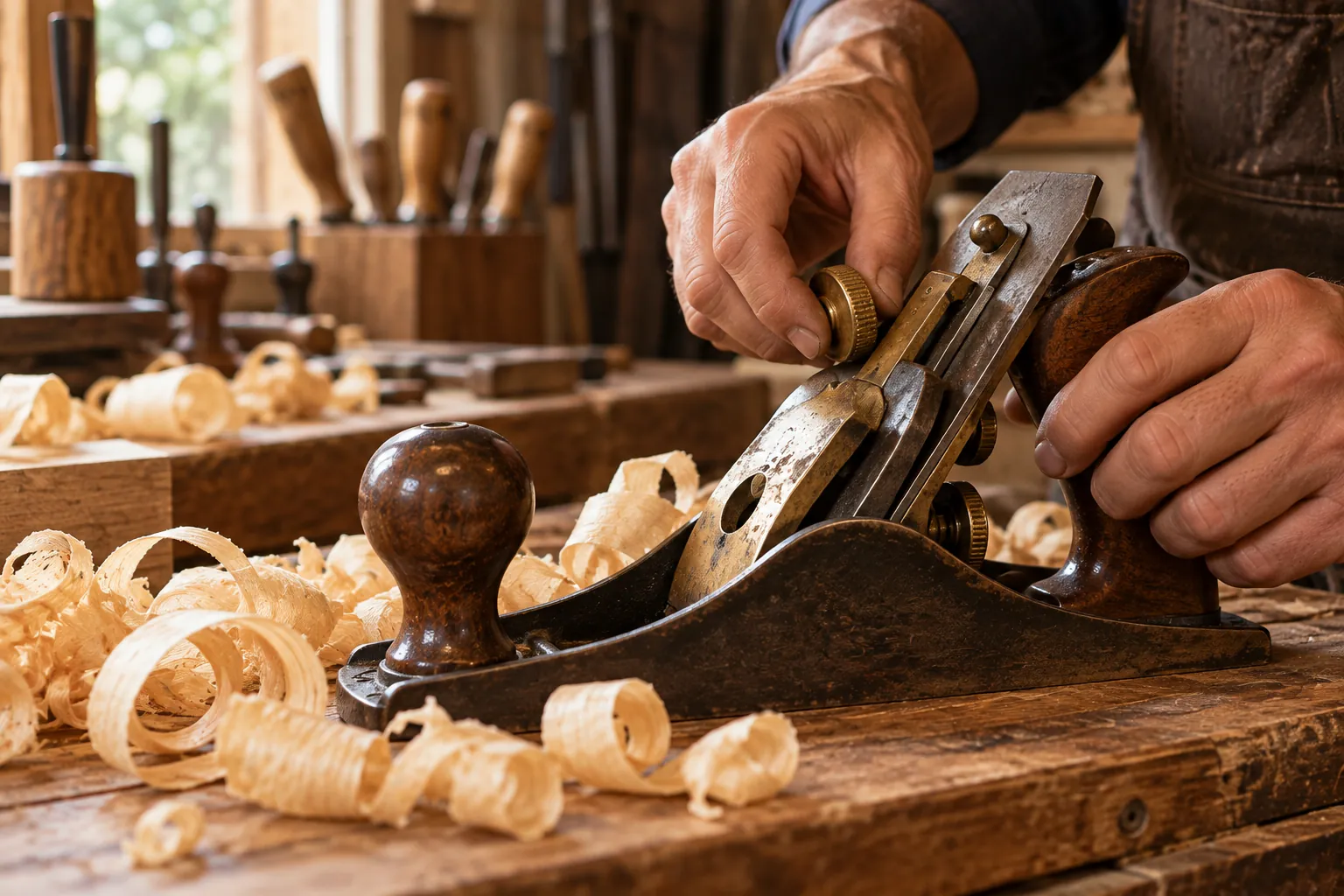
To set the iron, tap the back of the iron to advance it and the heel of the body to release the wedge. Keep the sole flat and lightly waxed. Wooden planes are light and pleasant to use, and good ones remain excellent tools.
QuestionsFrequently asked questions
How can I tell how old a wooden plane is?
Check the maker’s stamp, the length and the chamfers. Flat chamfers and 10 in length point to the 18th century.
What is a try plane?
A long wooden bench plane used to true edges and surfaces, longer than a jack.
Are old wooden planes worth anything?
Most are modestly priced user tools; early named makers such as Nicholson and Chelor are valuable.
What is a transitional plane?
A plane with a wooden body and a metal frame holding the iron and adjuster, made by Stanley from 1870.
ReferencesSources
These are the pages and manuals the facts in this article come from. Where they disagree, we say so in the text.
- supertool.com/etcetera/wplanes/w1819.htm
- www.popularwoodworking.com/arts-mysteries/cesar-chelor-1784
- en.wikipedia.org/wiki/Moulding_plane
- supertool.com/StanleyBG/stan4.htm
- en.wikipedia.org/wiki/Hand_plane
Published 24 October 2026 · Written and fact-checked by the HeirloomID editors. Spotted an error? Tell us.