Key points
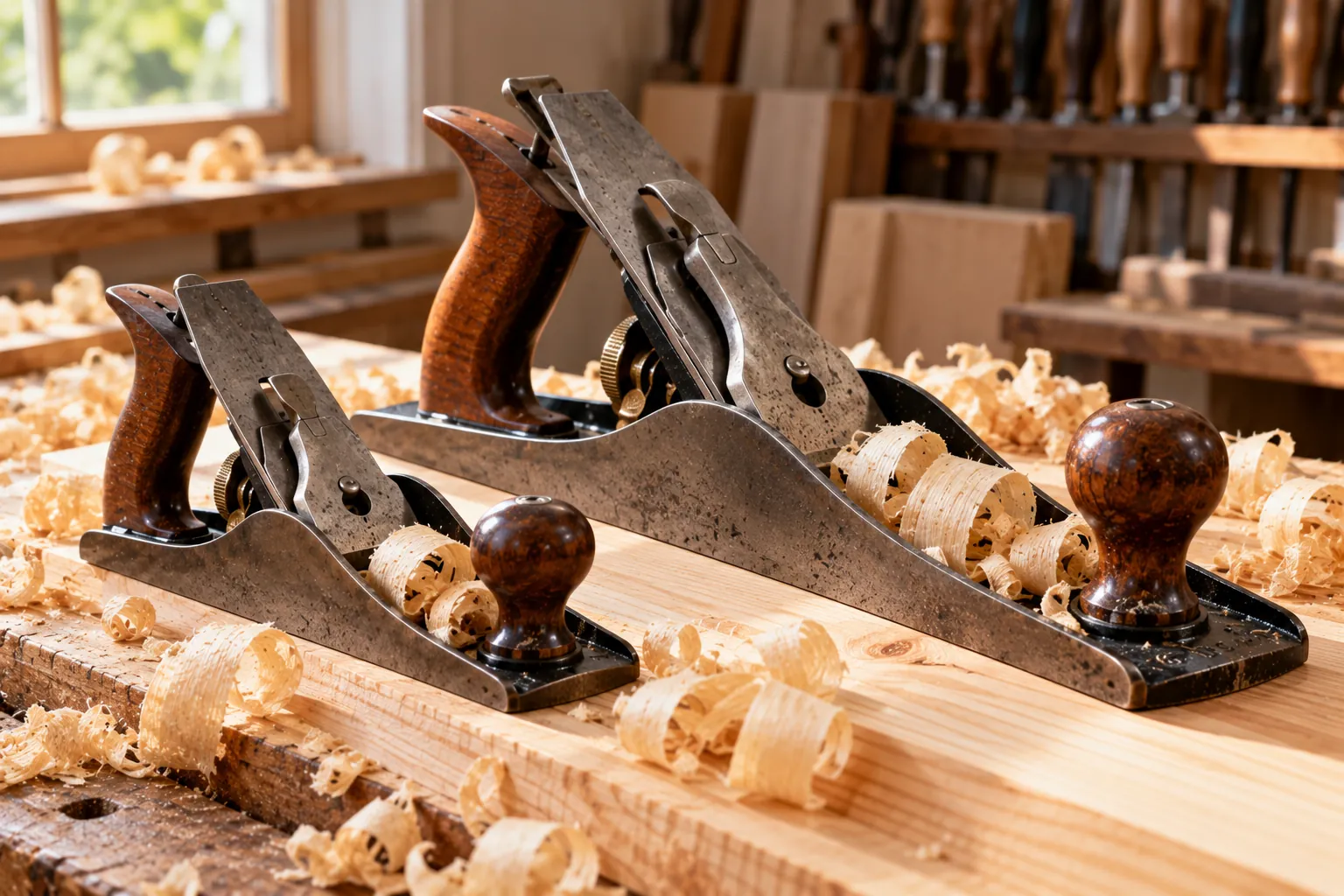
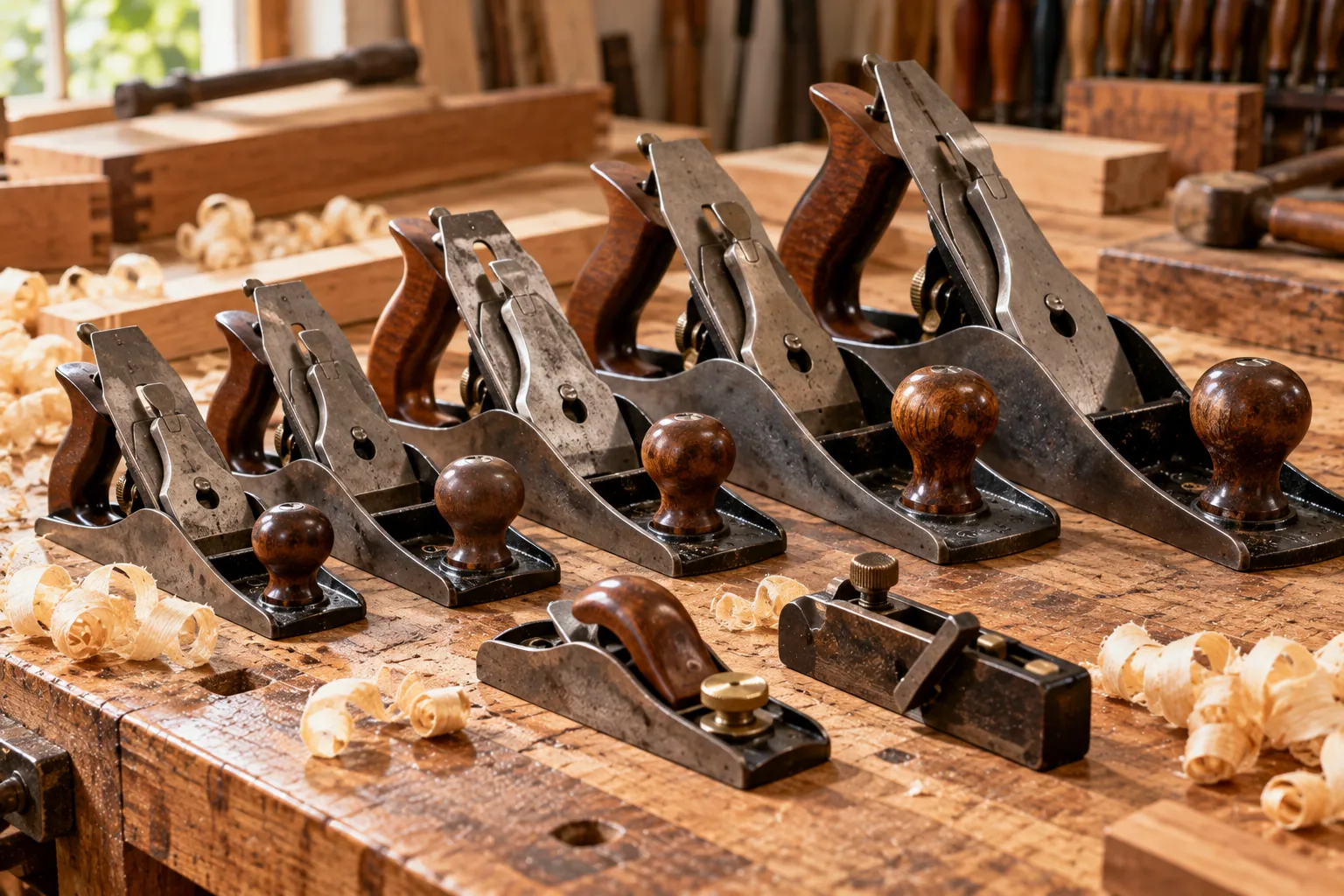
- Bench plane numbers rise with length: No. 1 (5½ in) to No. 8 (24 in).
- Smoother No. 4 (9 in) and jack No. 5 (14 in) are the most common.
- Bed Rock planes (1898 to about WWII) add 600 to the number, e.g. 604.
- Block planes work end grain with a low-angle iron.
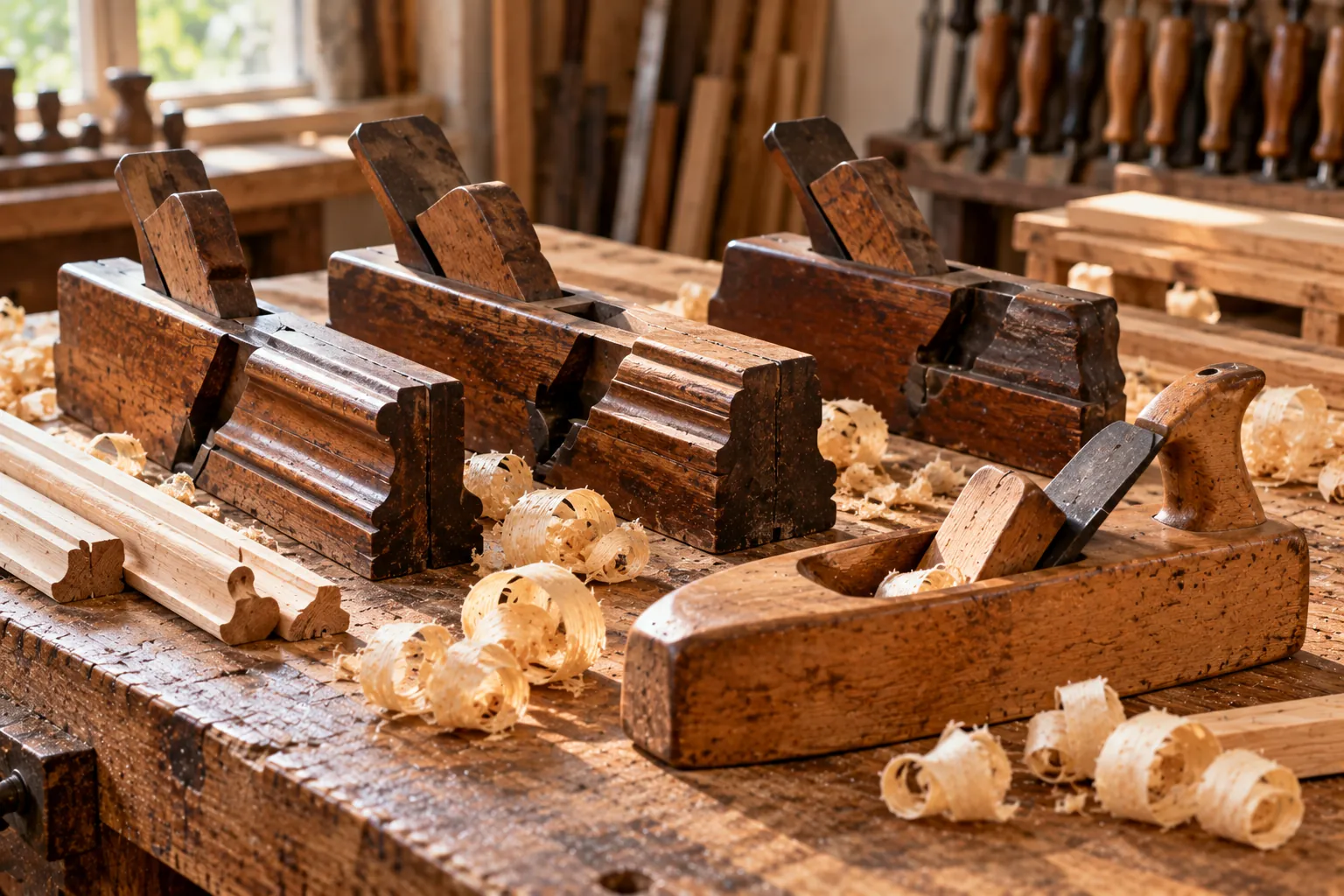
- Combination No. 45 and No. 55 planes cut grooves and mouldings.
SizesStanley bench plane sizes chart
| No. | Type | Length | Iron width | Weight |
|---|---|---|---|---|
| 1 | Smoother | 5½ in | 1¼ in | 1⅛ lb |
| 2 | Smoother | 7 in | 1⅝ in | 2¼ lb |
| 3 | Smoother | 8 in | 1¾ in | 3⅛ lb |
| 4 | Smoother | 9 in | 2 in | 3¾ lb |
| 4½ | Smoother (wide) | 10 in | 2⅜ in | 4¾ lb |
| 5 | Jack | 14 in | 2 in | 4¾ lb |
| 5¼ | Junior jack | 11½ in | 1¾ in | — |
| 5½ | Jack (wide) | 15 in | 2¼ in (2⅜ in from 1939) | 6¾ lb |
| 6 | Fore | 18 in | 2⅜ in | 7¾ lb |
| 7 | Jointer | 22 in | 2⅜ in | 8⅛ lb |
| 8 | Jointer | 24 in | 2⅝ in | 9¾ lb |
Figures are from Patrick Leach’s Blood & Gore, which notes sizes varied by about ½ in over the decades. A “C” after the number (4C, 5C) means a corrugated sole.
UsesWhat each bench plane is for
- Smoothing plane (No. 3–4½): final surfacing before finishing.
- Jack plane (No. 5, 5½): the all-rounder: rough flattening, edges and general work.
- Fore plane (No. 6): flattening and straightening longer boards.
- Jointer (No. 7, 8): jointing edges and final flattening; length bridges the hollows.
Which to buy first? See Stanley No. 4 vs No. 5.
Bailey vs Bed RockBailey and Bed Rock planes
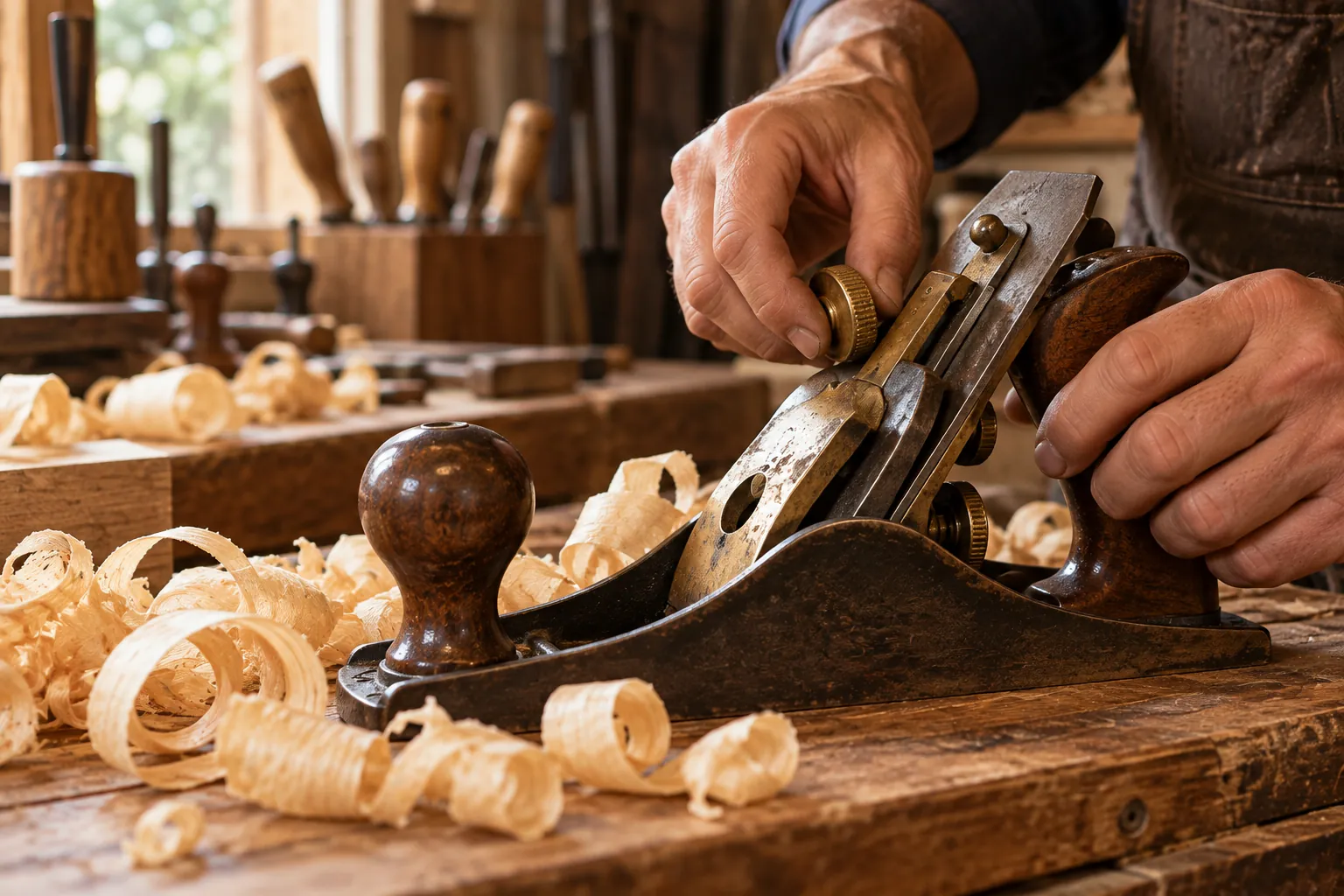
Most Stanley bench planes are Bailey pattern, after Leonard Bailey’s patents. Stanley also made a premium Bed Rock line from 1898 until around the Second World War: Wikipedia notes Bed Rock numbers are the base number plus 600 (a 604 is a Bed Rock No. 4). Leach explains the Bed Rock frog seats along its full length on a machined bed and can be adjusted without removing the iron. Learn to tell types apart with our type study and Stanley plane guide.
SpecialtyOther types of hand planes
| Plane | Use | Classic Stanley |
|---|---|---|
| Block plane | End grain, chamfers; iron bedded low, about 12° on low-angle models | No. 9½, 60½ |
| Rabbet (rebate) plane | Cuts rabbets | No. 78 (1885–1973) |
| Plough plane | Grooves and dadoes | No. 45 and others |
| Router plane | Levels the bottom of recesses | No. 71 (1885–1973) |
| Combination plane | Grooves, beads, mouldings | No. 45 (1884–1962), No. 55 (1897–1962) |
| Cabinet scraper | Fine finishing of difficult grain | No. 80 (1898–1984) |
Wooden planes and transitional planes are covered in antique wooden hand planes.
QuestionsFrequently asked questions
What are the main types of hand planes?
Bench planes (smoothing, jack, fore, jointer), block planes, and specialty planes such as rabbet, plough, router, combination and scraper planes.
What size is a Stanley No. 4?
About 9 in long with a 2 in iron.
What is the difference between Bailey and Bed Rock?
Bed Rock frogs seat fully on a machined bed and adjust without removing the iron; Bed Rock numbers add 600.
What does the C mean on a Stanley plane?
A corrugated sole, with grooves to reduce friction.
ReferencesSources
These are the pages and manuals the facts in this article come from. Where they disagree, we say so in the text.
- supertool.com/StanleyBG/stan1.htm
- supertool.com/StanleyBG/stan15.htm
- supertool.com/StanleyBG/stan6.htm
- supertool.com/StanleyBG/stan8.htm
- supertool.com/StanleyBG/stan10.htm
- en.wikipedia.org/wiki/Hand_plane
- finewoodworking.com/project-guides/handplanes/making-sense-of-handplane-numbers
Published 24 October 2026 · Written and fact-checked by the HeirloomID editors. Spotted an error? Tell us.