Key points
- ISMACS warns there is a significant risk the fee will be more than the machine’s value.
- Never use an appraiser who charges a percentage of the value or offers to buy the item (ASA).
- Insurance appraisals use replacement cost; estates and donations use fair market value.
- Free auction-house estimates show what a sale might bring, but aren’t formal appraisals.
Free firstFree ways to value a sewing machine
- Identify and date it. Use our serial number lookup and model identifier.
- Check sold prices. Our sold-price finder opens completed sales for your model. ISMACS recommends watching final selling prices rather than relying on any price guide.
- Get a dealer’s offer. Singer itself suggests asking an antique store or pawn shop what they would pay. ISMACS says to multiply a dealer’s purchase offer by at least two to estimate retail.
- Ask an auction house for an estimate. Useful for selling, but an appraisal firm warns these reflect what the auction expects you to receive and are not good for insurance.
When to payWhen a professional appraisal is worth it
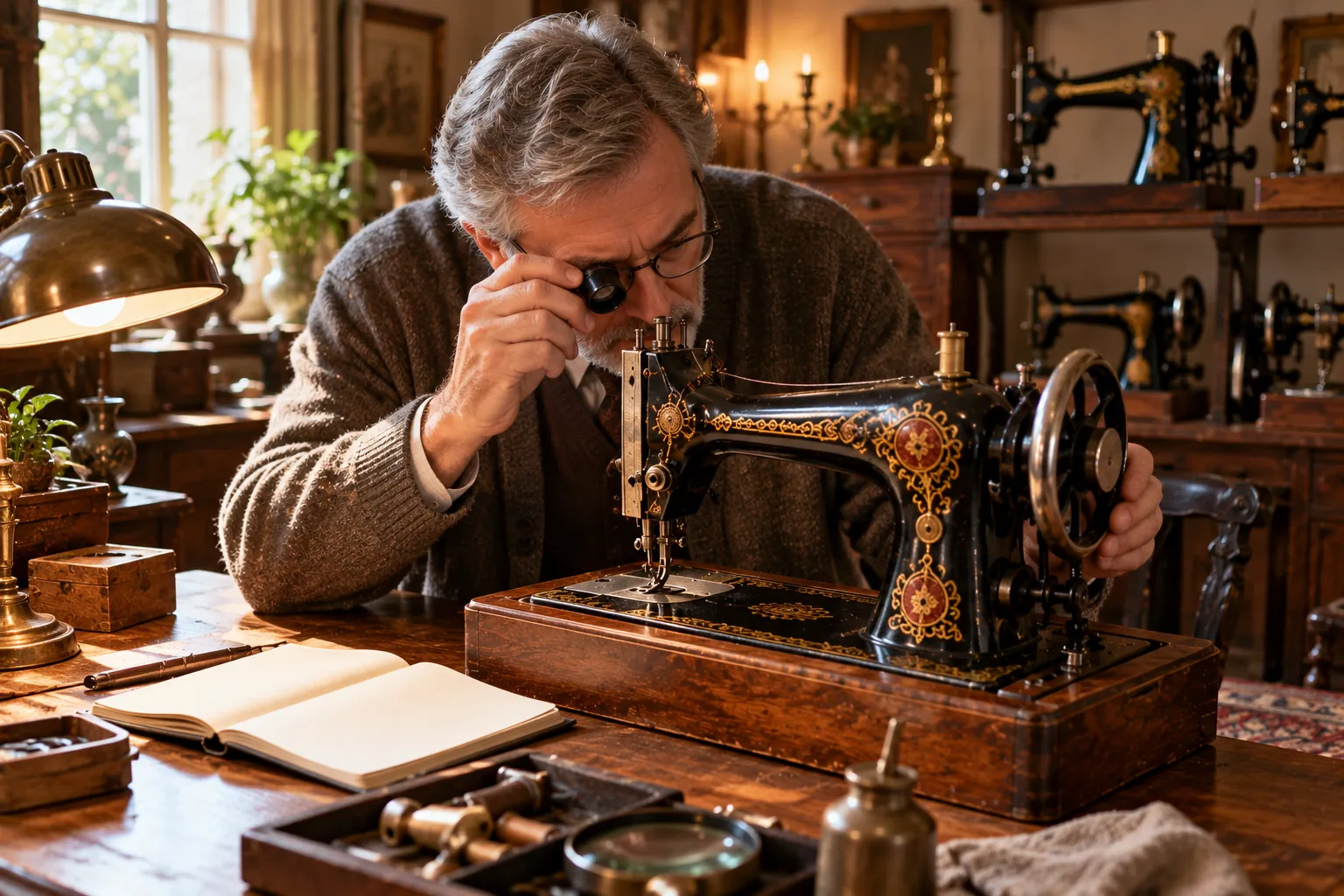
Pay for an appraisal when you need a written value for insurance, an estate, a divorce settlement or a charitable donation, or when you have something rare, such as a 19th-century machine. For a rare early machine, ISMACS advises an in-person appraisal from someone who does not intend to buy it from you. ISMACS also says that remote valuation “is not possible other than by hands-on assessment”, so treat quick online appraisals with caution.
Finding oneHow to choose an appraiser
- Credentials. Look for members of the American Society of Appraisers (ASA), the International Society of Appraisers (ISA) or the Appraisers Association of America (AAA). ASA’s designations require years of full-time experience and reaccreditation.
- USPAP. ISA requires its members to comply with the Uniform Standards of Professional Appraisal Practice; the AAA says appraisers should have taken the USPAP course.
- Fees. ASA says fees are usually hourly, half-day or full-day. Never use an appraiser who charges a percentage of the value, and never one who offers to buy what they appraise.
- Purpose. Tell the appraiser why you need it. ISA explains that insurance uses replacement cost, while estates, gifts and donations use fair market value.
PreparingWhat to bring
Clear photos of the whole machine, the decals, the badge and the serial number; the serial lookup result; any case, cabinet, attachments, manual and receipts; and anything you know about its history.
QuestionsFrequently asked questions
How much does it cost to get a sewing machine appraised?
Qualified appraisers usually charge by the hour or day. For most vintage Singers the fee can exceed the machine’s value, so check sold prices first.
Can I get a free appraisal of an antique sewing machine?
You can get free estimates from dealers and auction houses, and free sold-price data online. These are not formal written appraisals.
Are online antique appraisals reliable?
ISMACS says a meaningful valuation needs hands-on assessment. Online opinions can help, but use sold prices to check them.
Who appraises antique sewing machines?
Personal-property appraisers with ASA, ISA or AAA credentials, ideally with experience of mechanical antiques or collectibles.
ReferencesSources
These are the pages and manuals the facts in this article come from. Where they disagree, we say so in the text.
- ismacs.net/sewing_machine_articles/how_much_is_my_sewing_machine_worth.html
- www.appraisers.org/why-hire-an-appraiser/faqs-for-consumer
- www.isa-appraisers.org/about/policies/code-of-ethics
- isa-appraisers.org/about/blog/details/427/fair-market-value-and-replacement-cost-what-s-the-difference
- www.isa-appraisers.org/about/blog/details/296/what-is-uspap-and-why-is-it-important-to-hire-a-uspap-compliant-appraiser
- appraisersassociation.org/find-an-appraiser/about-appraising
- www.otoole-ewald.com/blog/tag/Valuation
- help.singer.com/en-US/whats-my-sewing-machine-worth-407312
Published 24 October 2026 · Written and fact-checked by the HeirloomID editors. Spotted an error? Tell us.