Key points
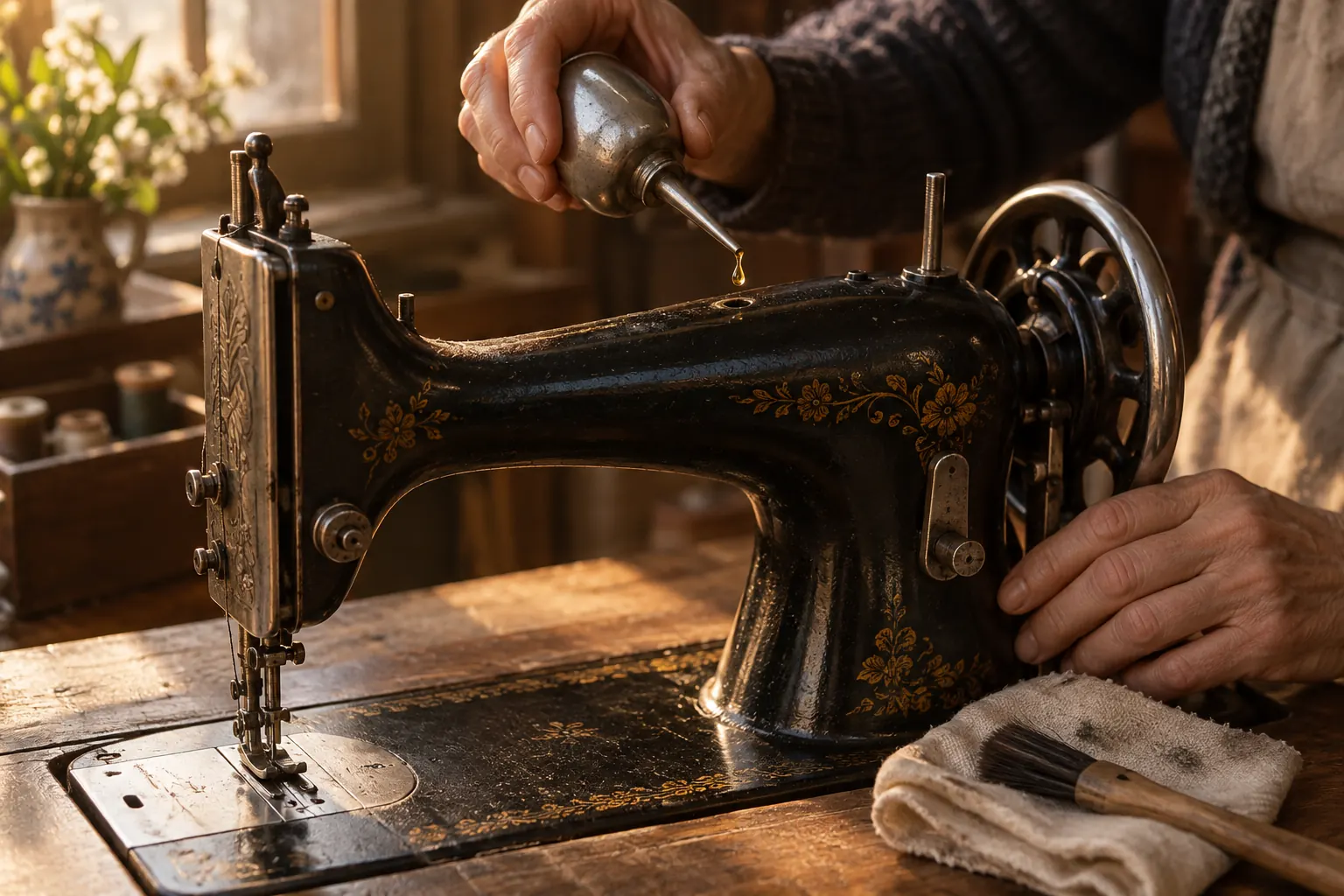
- Mechanism: clear sewing machine oil, one drop per point.
- Motor ports and grease tubes: motor lubricant or grease, never oil.
- Avoid 3-in-1 (it “varnishes up”), WD-40 and motor oil.
- The 201 manual says oil daily if the machine is in constant use.
The oilWhich oil is right?
Allbrands’ lubrication guide says to use a good, clear sewing machine oil, warns that 3-in-1 oil “will ‘varnish up’, becoming a sticky gumming residue”, and says not to use WD-40 or motor oil. The Singer 201 manual is blunt: inferior oil clogs the bearings and causes rapid wear. Our clean and oil guide walks through the full routine.
| Product | Use on a vintage Singer? |
|---|---|
| Clear sewing machine oil | Yes: mechanism, hook, oil holes |
| Motor lubricant / sewing machine grease | Yes: motor grease tubes and wick ports, gear grease points |
| 3-in-1 or household oil | No: gums up |
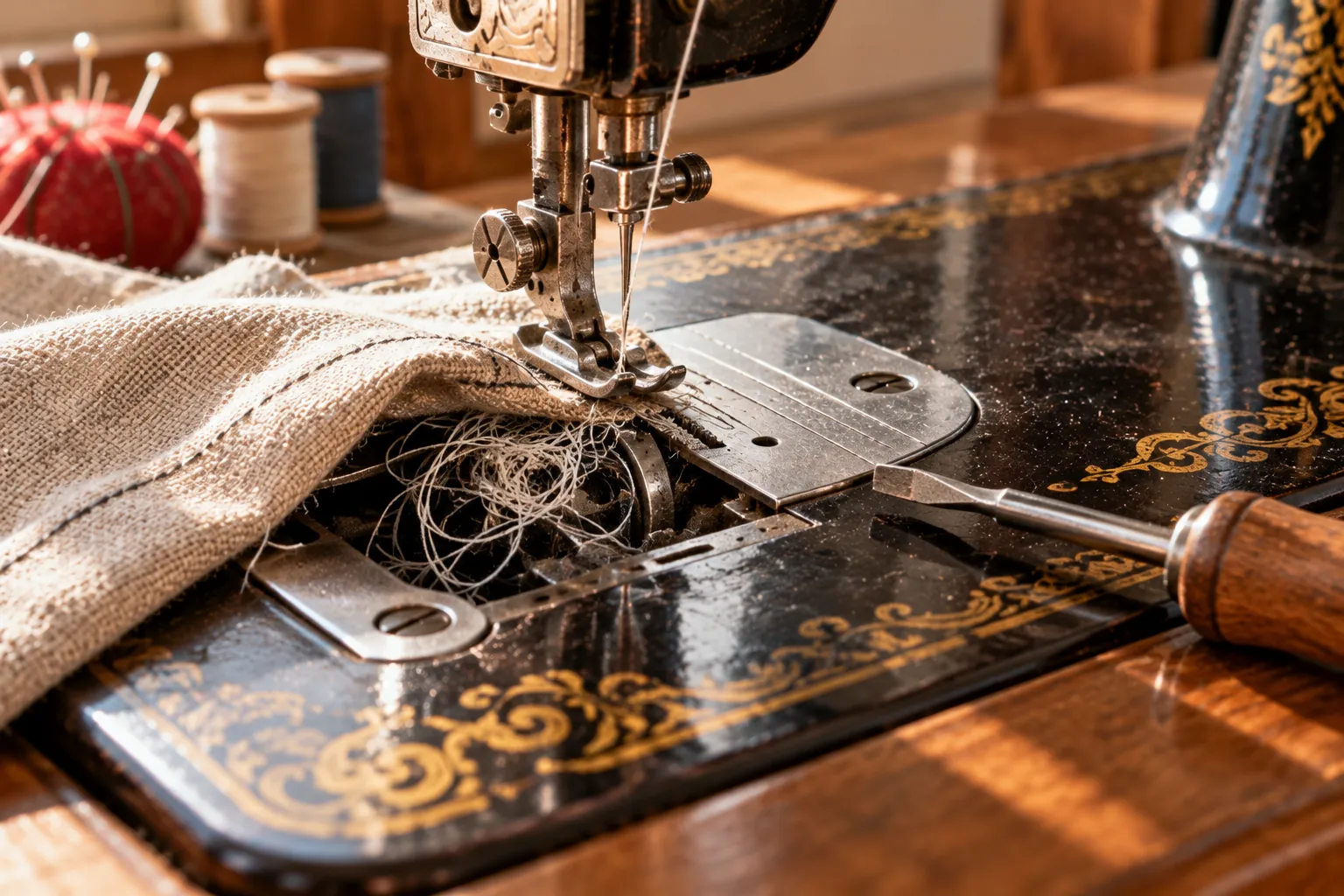
| WD-40 | Not as a lubricant; at most a one-off solvent when freeing a seized part |
| Car motor oil | No |
The motorGrease, not oil, in the motor
singer-featherweight.com warns “DO NOT USE OIL in your Singer Motor”: push a pea-size amount of lubricant into each motor port twice a year, or about once a quarter if you sew daily. Allbrands now suggests petroleum jelly for the wick pots; specialist suppliers sell their own grease. Both agree on one thing: no oil. Grease should not go on plastic or nylon gears. Some later motors, such as the one described in the 221K manual, need no lubrication at all, so check the manual for your motor.
WhereWhere to oil a Singer sewing machine
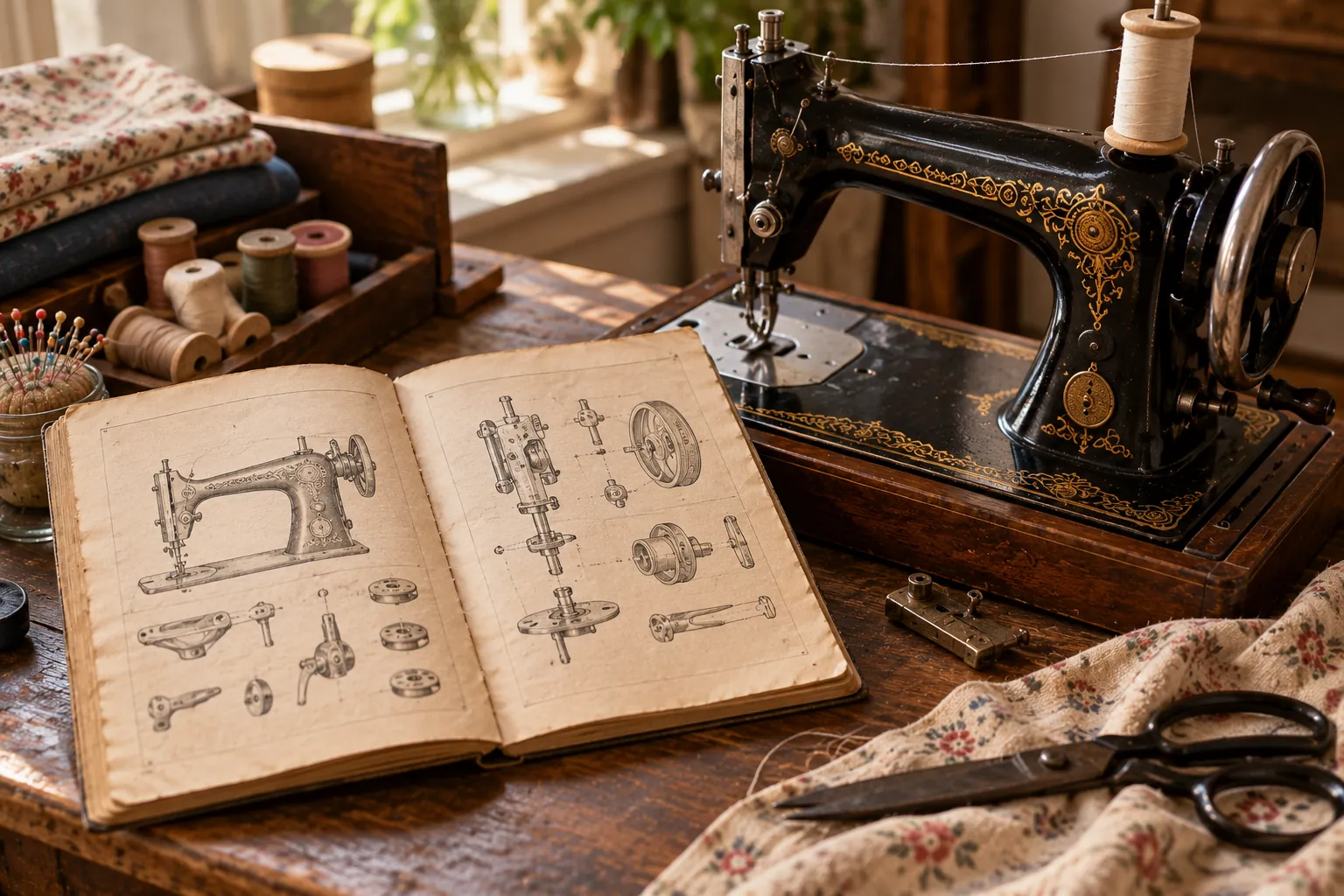
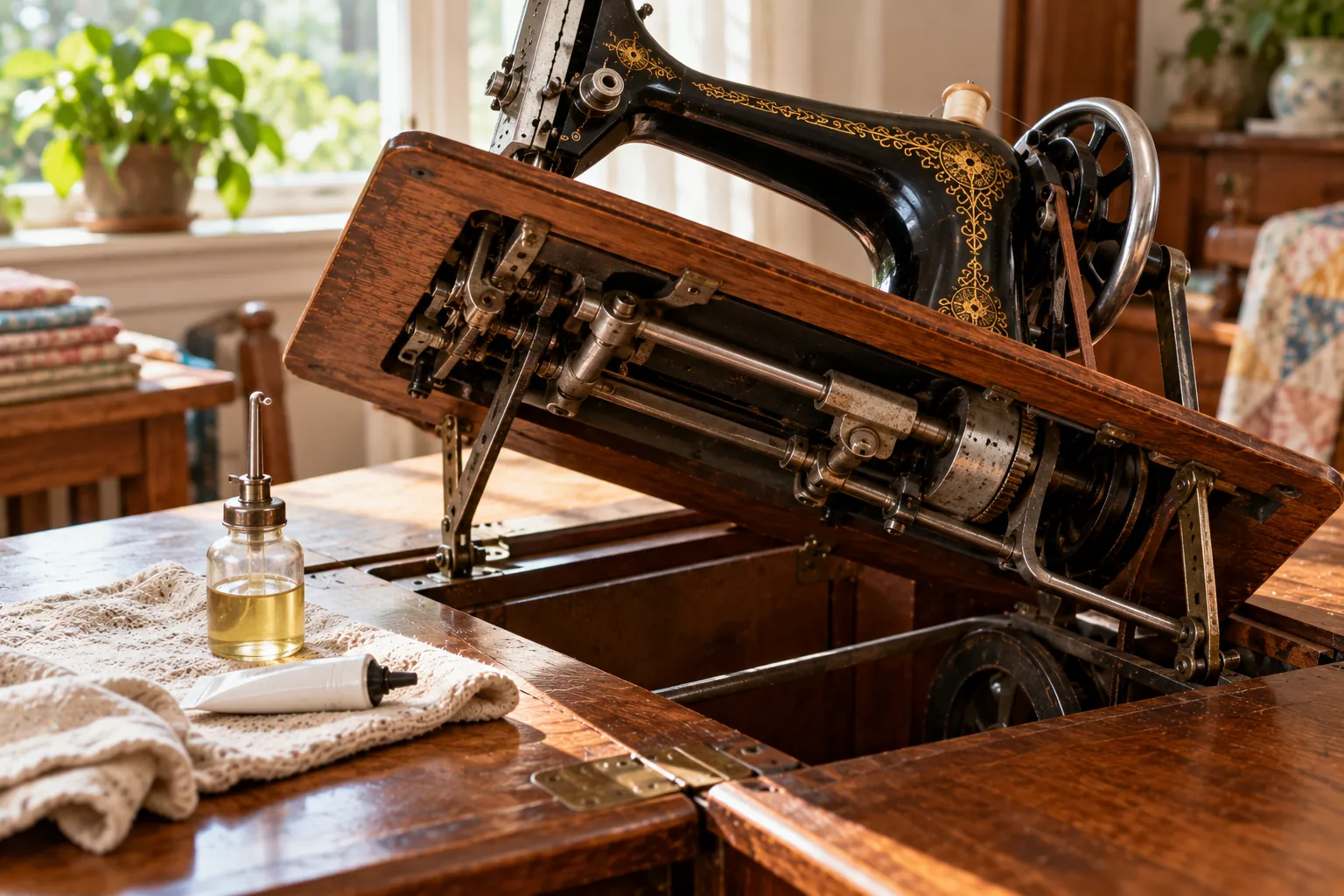
Every oil hole on the top of the arm, the needle bar and presser bar, the moving joints underneath, and the hook or shuttle race. Tip the head back in its cabinet to reach underneath. The manual for your model shows each point; see where to find a manual. On treadles, the 201 manual includes the treadle stand centres too.
How oftenHow often should you oil?
The Singer 201 manual says to oil daily if the machine is used continuously. For occasional sewing, oil after every few projects or whenever it sounds dry. After oiling, run the machine and sew on scrap fabric to take up excess oil.
QuestionsFrequently asked questions
Can I use WD-40 on my Singer sewing machine?
Not as a lubricant. Use sewing machine oil. Some restorers use a solvent briefly to free a seized part, then clean it off and oil properly.
Can I use 3-in-1 oil on a sewing machine?
No. It gums up and leaves a sticky residue.
Does a vintage Singer motor need oil?
Most take grease or motor lubricant in their ports, not oil. Check your model; never put oil in a grease-type motor.
Where are the oil holes on a Singer?
On the top of the arm, around the needle bar and presser bar, and on the moving parts underneath the bed. Your manual shows them.
ReferencesSources
These are the pages and manuals the facts in this article come from. Where they disagree, we say so in the text.
- www.allbrands.com/images2/common/pdfs/products%20to%20oil%20and%20lubricate.pdf
- singer-featherweight.com/products/sew-retro-grease
- ismacs.net/needlebar/main/manuals/singer201/index4.html
- ismacs.net/needlebar/main/restoration/seized
- pungolivinghome.com/2019/09/28/vintage-singer-external-motors-do-they-use-grease-or-do-they-use-oil
Published 24 October 2026 · Written and fact-checked by the HeirloomID editors. Spotted an error? Tell us.