Key points
- 15x1 = 130/705H = HAx1 = Singer 2020: the standard household needle.
- Models using it include the 15, 27/127, 28/128, 66, 99, 185, 201, 221, 222K, 301, 401A, 403A, 404 and 500A.
- Size 80/12 suits most piecing and dressmaking; 90/14–100/16 for denim.
- The flat side faces left, right or back depending on the model; get it wrong and it won’t sew.
- Change the needle every eight hours of sewing or after each project (Schmetz).
The systemWhat needle does a vintage Singer use?
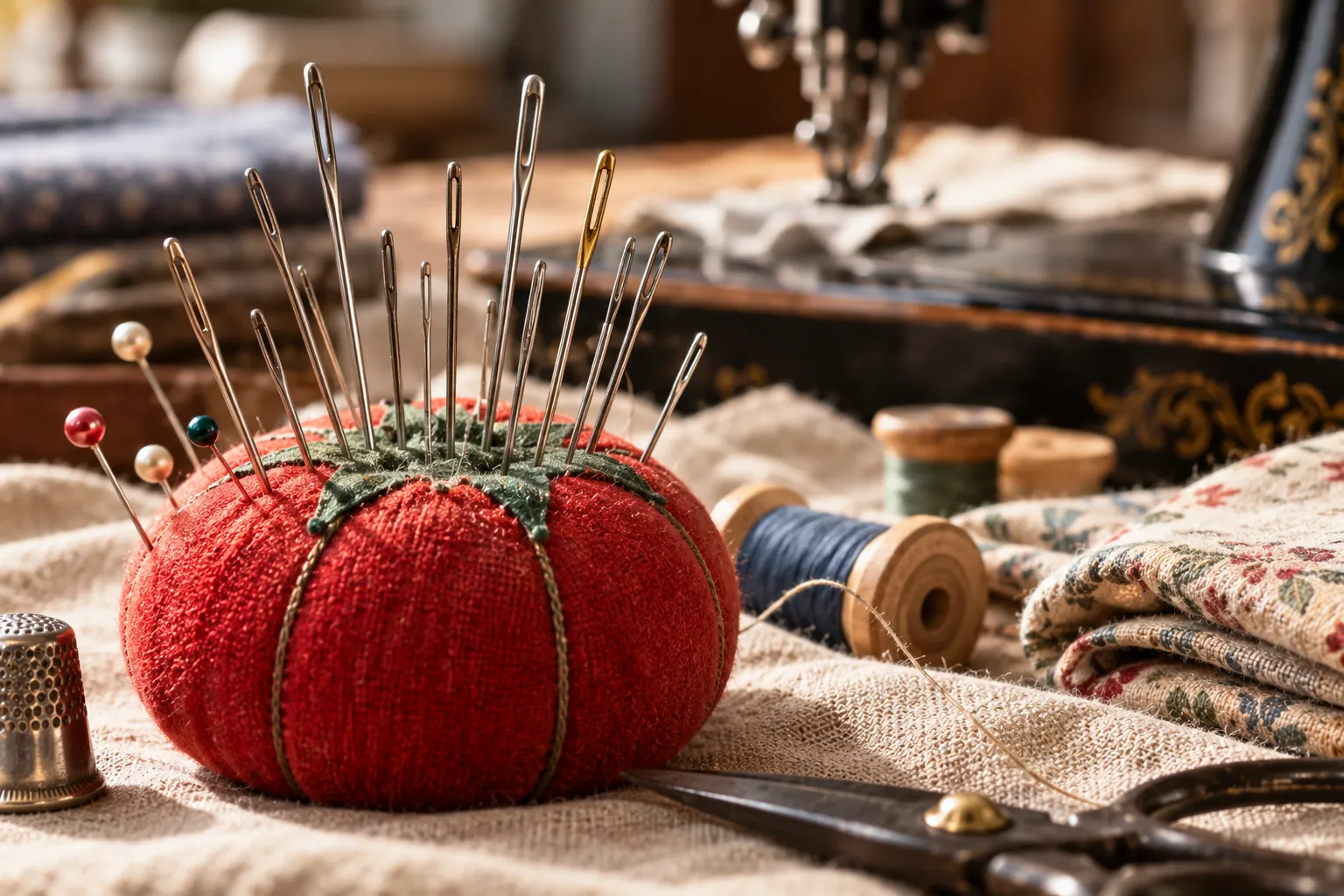
Singer’s class 15 introduced a needle with a flat on one side of the shank, designated 15x1. Schmetz says today’s 130/705 H is the same needle (it is also called HAx1, or 2020 in Singer’s catalogue). Wikipedia notes that needles sold as “universal” are generally this type. So yes: modern Schmetz, Singer or Organ universal needles fit.
singersewinginfo’s needle table lists 15x1 for the 15, 27, 28, 66, 99, 127, 128, 185, 201, 221, 222K, 301, 401, 403 and 404; ISMACS confirms it for the 500 and 503. The exceptions are rare: the early Vibrating Shuttle 1 (20x1), the model 12 (12x1), the 206/306/319/320 (206x13) and industrial machines.
DirectionWhich way does the needle go in?
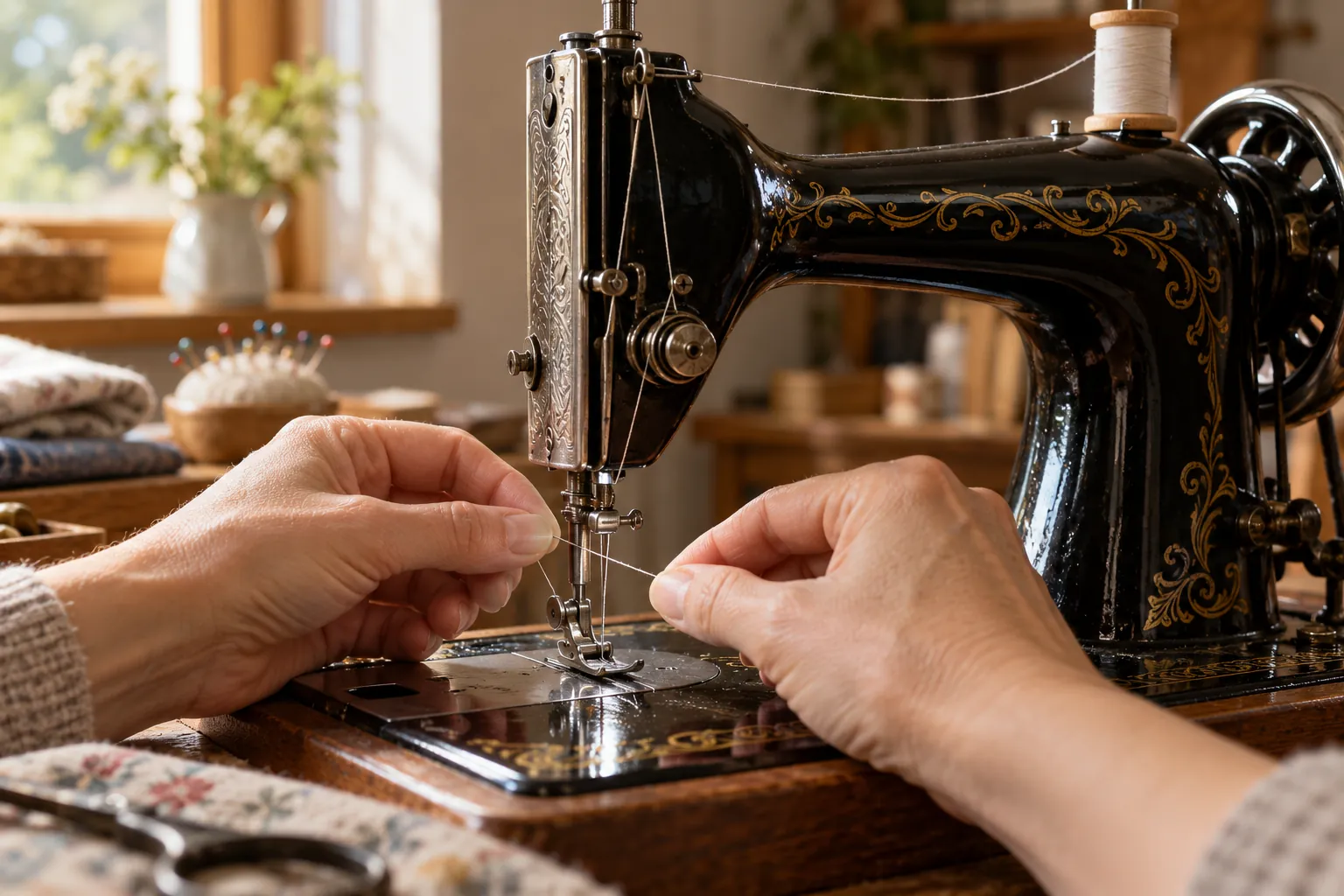
This is where most problems start. Each Singer manual says which way the flat side of the shank faces, and you thread the eye from the side the long groove is on.
| Model | Flat side of needle | Thread the eye |
|---|---|---|
| 15-88, 15-89, 15-90, 15-91 | Left | Right to left |
| Early class 15 (e.g. 15K110) | Right | Left to right |
| 66, 99, 185 | Right | Left to right |
| 27/127, 28/128 | Right | Left to right |
| 201 | Left | Right to left |
| 221, 222K, 301 | Left | Right to left |
| 401A, 403A, 404, 500A (slant needle) | Back | Front to back |
Push the needle up into the clamp as far as it will go before tightening. singer-featherweight.com notes that if you hear a “clunk” when turning the handwheel by hand, the needle is not fully up and is hitting the hook.
SizesNeedle size for each fabric
| Fabric | Needle | Size |
|---|---|---|
| Fine cotton, silk, lawn | Universal or Microtex | 70/10–75/11 |
| Quilting cotton, piecing, dressmaking | Universal or Microtex | 80/12 |
| Medium: linen, poplin, light canvas | Universal | 90/14 |
| Denim, canvas, duck | Jeans/denim | 90/14–110/18 |
| Thin leather | Leather (cutting point) | 90/14–110/18 |
Metric sizes are the blade diameter in hundredths of a millimetre, so a 90 is 0.9 mm. Schmetz warns leather needles must not be used on woven or knit fabric, because their cutting point slices the threads. For heavy work see leather and heavy fabric on a vintage Singer.
When to changeHow often to change the needle
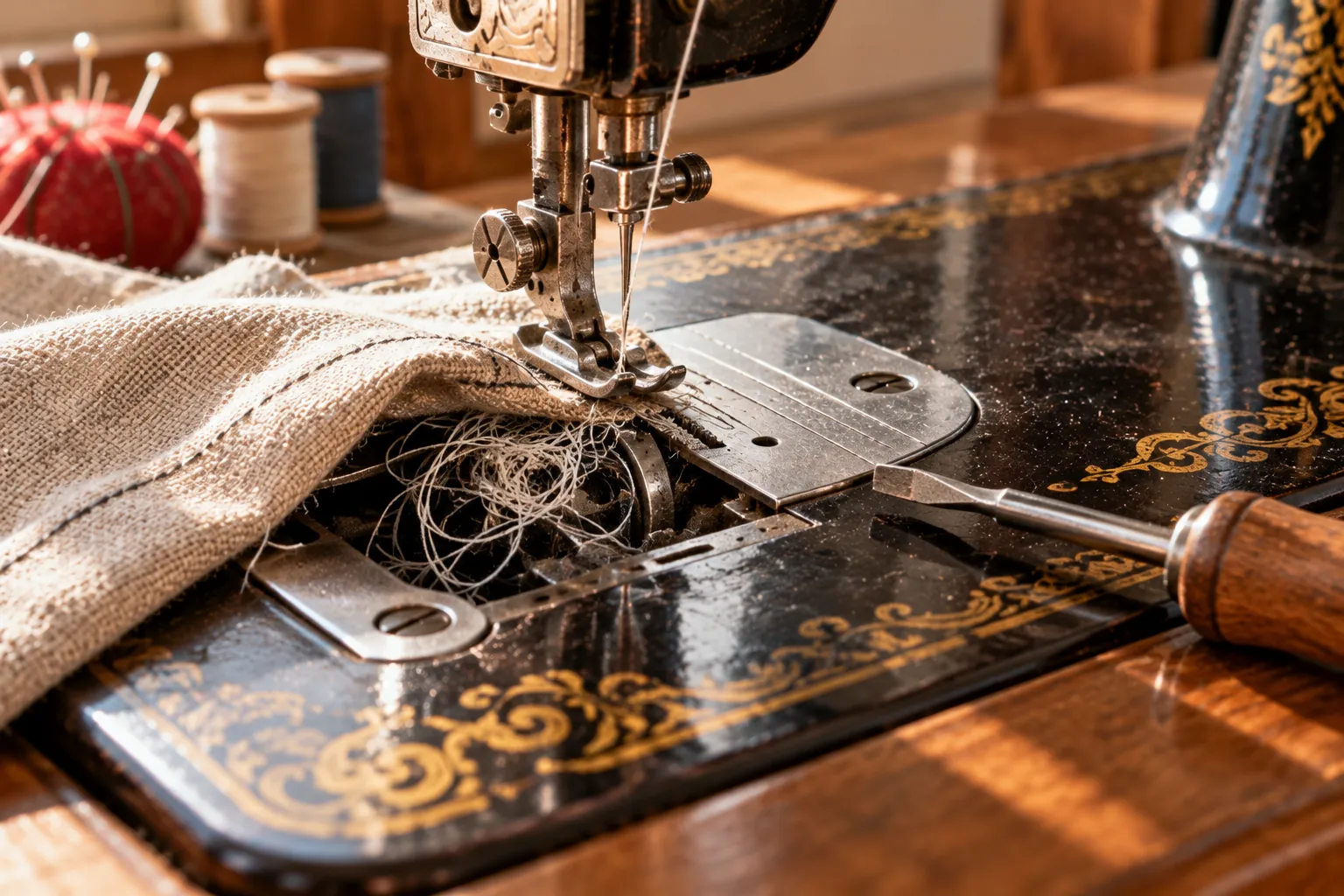
Schmetz’s rule of thumb is a new needle after every eight hours of sewing or after each project. A bent or blunt needle is the most common cause of skipped stitches, broken thread and needle breaks (see troubleshooting).
QuestionsFrequently asked questions
Can I use Schmetz needles in my vintage Singer?
Yes. Schmetz 130/705 H needles are the modern equivalent of Singer’s 15x1.
What needle does a Singer Featherweight use?
A 15x1 (130/705H) needle, flat side to the left, threaded from right to left. Size 80/12 suits most piecing.
Are universal needles the same as 15x1?
Yes. Universal household needles are the 130/705H system, equivalent to 15x1.
Why does my vintage Singer skip stitches with a new needle?
The needle is probably in the wrong way round or not pushed fully up. Check the direction for your model.
ReferencesSources
These are the pages and manuals the facts in this article come from. Where they disagree, we say so in the text.
- singersewinginfo.co.uk/needles
- www.singersewinginfo.co.uk/15
- www.schmetzneedles.com/learning/pdf/ABC-brochureNEW.pdf
- en.wikipedia.org/wiki/Sewing_machine_needle
- en.wikipedia.org/wiki/Singer_Model_27_and_127
- ismacs.net/singer_sewing_machine_company/singer-500-rocketeer-sewing-machine.html
- ismacs.net/singer_sewing_machine_company/manuals/singer-model-15-88-89-sewing-machine-manual.pdf
- ismacs.net/singer_sewing_machine_company/manuals/singer-model-66-18-sewing-machine-manual.pdf
- ismacs.net/singer_sewing_machine_company/manuals/singer-model-99-31-sewing-machine-manual.pdf
- ismacs.net/needlebar/main/manuals/singer201/index.html
- ismacs.net/needlebar/main/manuals/221k/index2.html
- singer-featherweight.com/blogs/blog/getting-to-know-your-featherweight-part-3
- ismacs.net/singer_sewing_machine_company/p401.html
Published 24 October 2026 · Written and fact-checked by the HeirloomID editors. Spotted an error? Tell us.