Key points
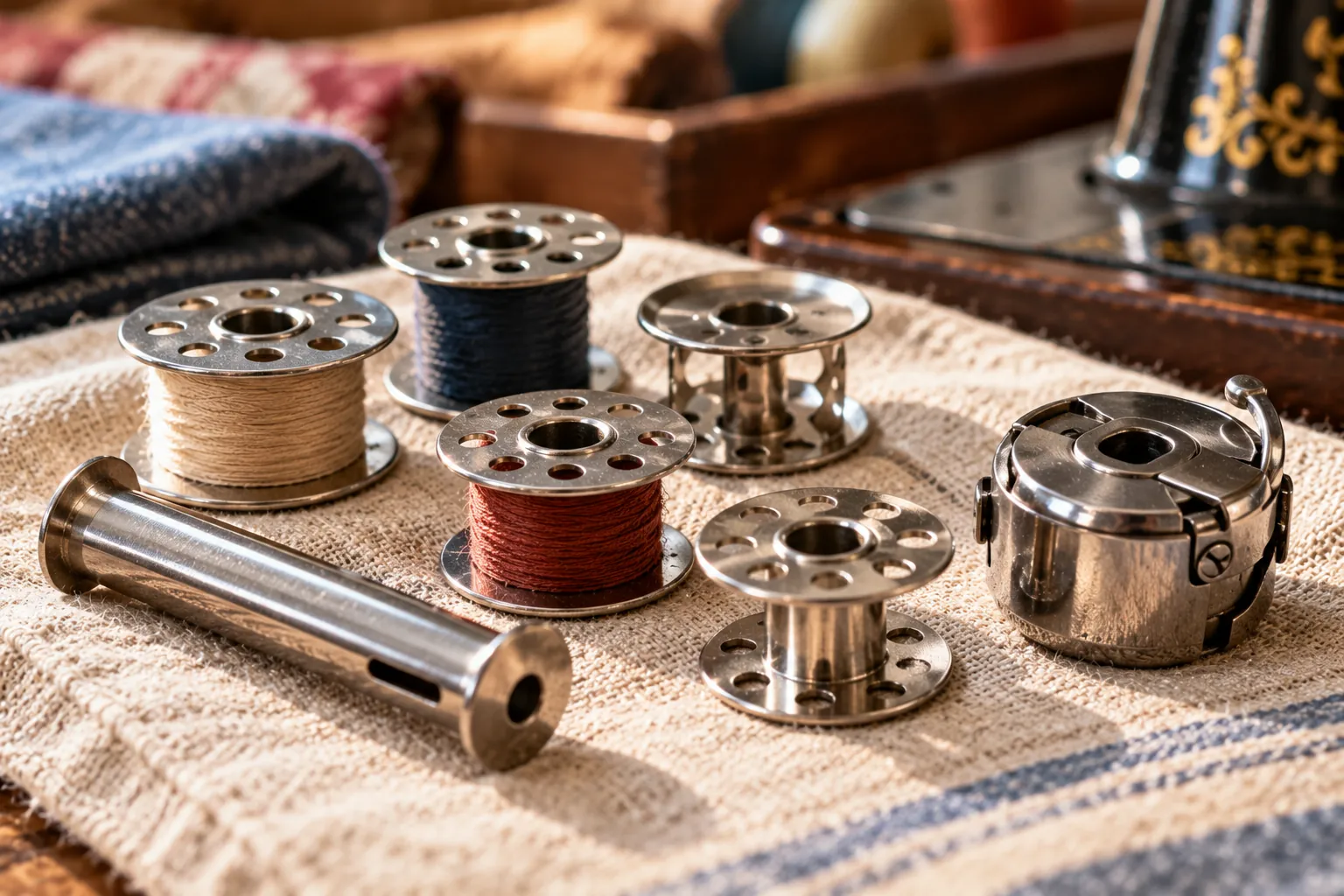
- Class 15: completely flat sides; 15-class machines.
- Class 66: slightly domed sides; 66, 99, 185, 201, 401A, 403A, 404, 500A, 503A.
- 221/301 (part 45785): flat but thinner than Class 15; Featherweights and the 301.
- Long (shuttle) bobbins: 27, 28, 127, 128.
- Class 15 and 15J are the same size; Class 66 bobbins do not work in a Class 15 case.
ChartWhich bobbin fits which Singer?
| Bobbin | Shape | Vintage Singer models |
|---|---|---|
| Class 15 (15J) | Completely flat sides | 15 class (15-88, 15-90, 15-91…) |
| Class 66 | Slightly domed sides | 66, 99, 185, 201, 401, 403, 404, 500, 503 |
| 221/301 (part 45785) | Flat, thinner than Class 15 | 221, 222K, 301 |
| Long shuttle bobbin | Long cylinder | 27, 127, 28, 128 |
The table follows ISMACS’s bobbin information page. It also shows why the Class 66 name is confusing: the 201 and the slant-needle machines use Class 66 bobbins too.
IdentifyHow to tell Class 15 from Class 66
Lay the bobbin on a flat surface and look at it side-on. Class 15 sides are completely flat; Class 66 sides bulge slightly. They are close in diameter, which is why they get mixed up. A Class 66 bobbin in a Class 15 case wobbles and gives uneven tension. Metal bobbins are the originals; good plastic Class 15 bobbins exist, but use what your manual specifies.
Bobbin casesBobbin cases and bobbin holders
Not every Singer has a removable bobbin case. The 15 class has a case that loads vertically on the left of the hook; the 201 has a case under a slide plate; the Featherweight’s case slides onto a stud; and drop-in machines such as the 66 and 99 have a fixed holder. Bobbin cases are model-specific and are often missing from machines for sale, so check before buying (see our buying checklist).
ProblemsCommon bobbin problems
- Thread loops under the fabric: usually top threading or tension, not the bobbin; see thread tension.
- Bobbin case latch won’t hold: the latch spring is worn or the case is not pushed fully onto the stud. Don’t pull hard on a Featherweight latch; they can break.
- Bobbin holder came out (drop-in machines): it should sit with its notch locating against the stop; check the manual before forcing it.
- Bobbin spins the wrong way: on a Featherweight it should turn anticlockwise as you pull the thread.
- Overfilled bobbin: the 221K manual lists it as a cause of looped stitches. Wind just below the rim; see winding and inserting a bobbin.
QuestionsFrequently asked questions
What bobbin does a Singer 15-91 use?
A Class 15 bobbin (also sold as 15J), flat-sided, in a removable bobbin case.
What bobbin does a Singer 201 use?
A Class 66 bobbin in a bobbin case under the slide plate.
Do Featherweight bobbins fit a Singer 301?
Yes. Both use the 221/301 bobbin, part 45785.
Are Class 15 and 15J bobbins the same?
Yes, 15J is another name for the Class 15 size.
Can I use plastic bobbins in a vintage Singer?
Some machines tolerate plastic Class 15 bobbins, but metal originals are safest, especially in drop-in and Featherweight cases.
ReferencesSources
These are the pages and manuals the facts in this article come from. Where they disagree, we say so in the text.
- ismacs.net/singer_sewing_machine_company/singer_bobbin_information.html
- ismacs.net/singer_sewing_machine_company/singer-class-301-sewing-machines.html
- ismacs.net/singer_sewing_machine_company/singer-class-201-sewing-machines.html
- www.singersewinginfo.co.uk/15
- ismacs.net/singer_sewing_machine_company/singer-model-500-series-descriptions.html
- singer-featherweight.com/blogs/schoolhouse/how-to-thread-a-featherweight-bobbin-case
- ismacs.net/needlebar/main/manuals/221k/index5.html
Published 24 October 2026 · Written and fact-checked by the HeirloomID editors. Spotted an error? Tell us.