Key points
- Red Eye is a decal, not a model: it is best known on the US-made Singer 66.
- The 66 is full size (about 30 lb); the 99, from 1911, is a 3/4-size version weighing about 22 lb.
- Both use a drop-in Class 66 bobbin and 15x1 needles.
- Early 66s used back-clamping presser feet; later ones use standard side-clamping low-shank feet.
The nameWhat is a Singer Red Eye?
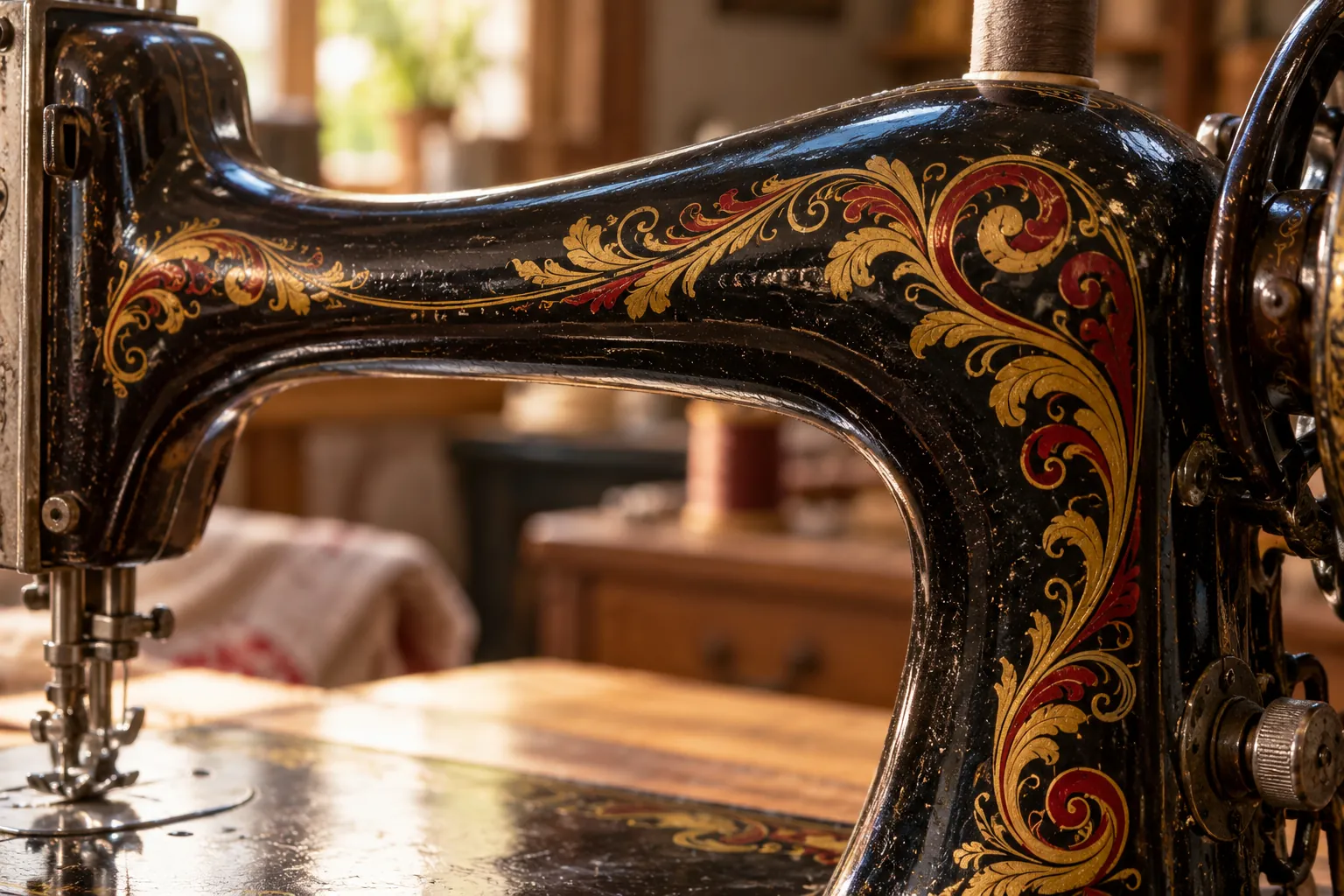
Singer decorated its japanned machines with transfer decals, and collectors name machines after them. The “Red Eye” pattern has a pair of red, eye-shaped motifs among gold scrolls. singersewinginfo calls the American Red Eye 66 “a very colourful machine”, and ISMACS shows an example made in the 1920s. Our decal guide has a section on it.
ComparisonSinger 66 vs 99
| Singer 66 | Singer 99 | |
|---|---|---|
| Years | 1902–1956 (UK 66K 1907–1939) | From 1911; 99K to about 1958 (ISMACS: to 1963 incl. industrial) |
| Size | Full size | 3/4 size |
| Weight | About 30 lb | About 22 lb |
| Bobbin | Drop-in, Class 66 | Drop-in, Class 66 |
| Hook | Horizontal oscillating | Horizontal oscillating |
| Power | Treadle, hand crank (66-3) or motor | Hand crank at first; motors from 1921 |
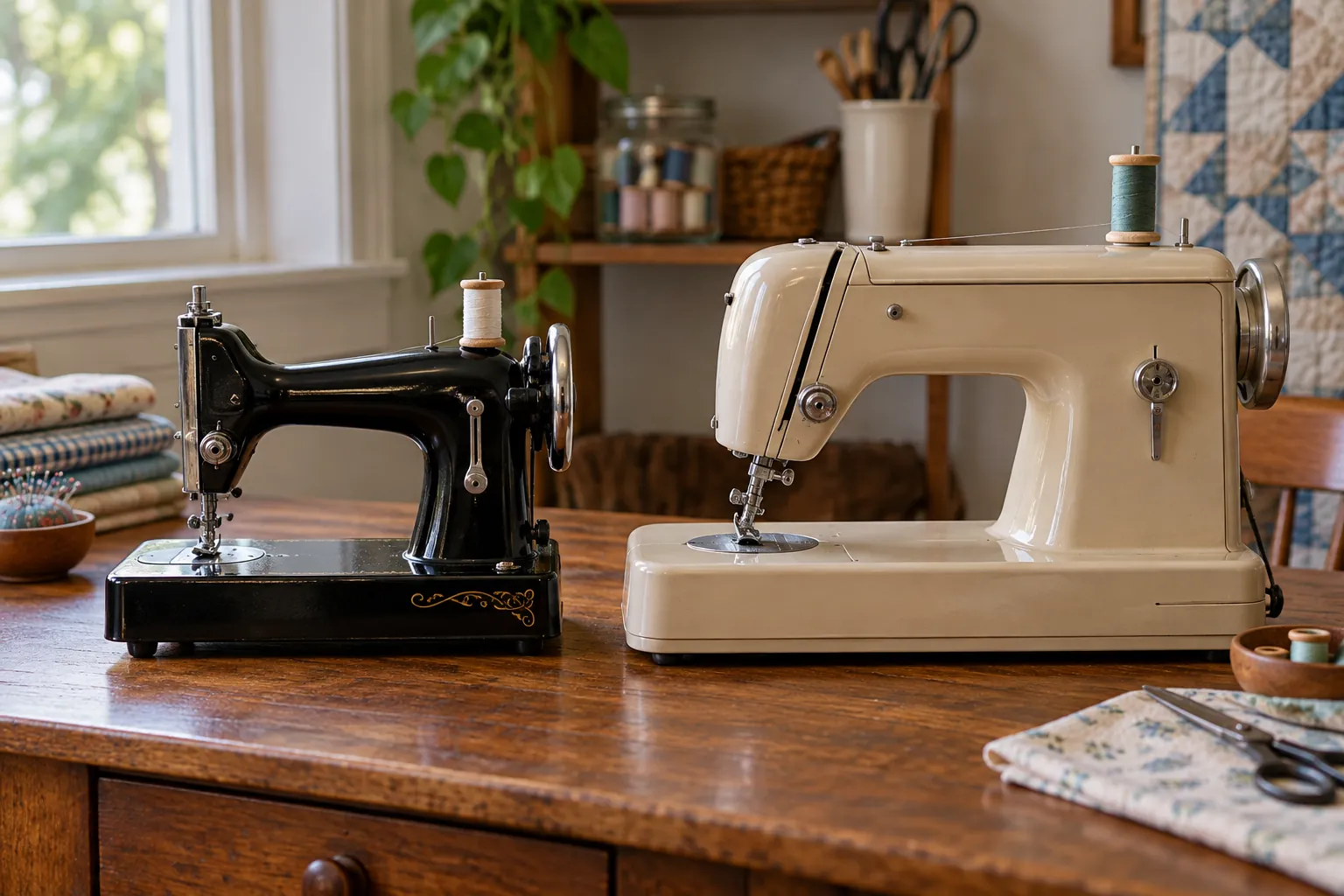
singersewinginfo says the 99 has an identical mechanism to the 66 and shares many parts other than the body casting. The quickest test is size: measure the bed. See our model pages for the 66 and 99.
FeetBack-clamping presser feet on early 66s
Early Model 66 machines used back-clamping presser feet, which attach to the back of the presser bar. Modern low-shank feet clamp from the side, so check which kind your machine has before buying attachments. See vintage Singer presser feet.
DatingHow old is my Red Eye Singer?
Use the serial number on the bed: our lookup gives the year it was allotted and the factory. Decal dates are approximate because Singer reused patterns for years.
QuestionsFrequently asked questions
Is the Red Eye a Singer 66 or 99?
The Red Eye decal is best known on the full-size Singer 66. Measure the bed: a 3/4-size machine is a 99.
What years were Singer Red Eye machines made?
Sources do not give firm dates for the decal. ISMACS shows a Red Eye 66 from the 1920s; the serial number dates your machine.
What bobbin does a Singer 66 Red Eye use?
A drop-in Class 66 bobbin.
Is a Singer Red Eye valuable?
They are attractive and popular, but they were made in large numbers. Condition of the decals and completeness matter most.
ReferencesSources
These are the pages and manuals the facts in this article come from. Where they disagree, we say so in the text.
- www.singersewinginfo.co.uk/singer_machines/domestic_machines/models/66
- ismacs.net/singer_sewing_machine_company/singer-class-66-sewing-machine.html
- ismacs.net/singer_sewing_machine_company/decals/domestics/redeye.html
- www.singersewinginfo.co.uk/singer_machines/domestic_machines/models/99k
- ismacs.net/singer_sewing_machine_company/singer-class-99-sewing-machines.html
- www.singersewinginfo.co.uk/99k
Published 24 October 2026 · Written and fact-checked by the HeirloomID editors. Spotted an error? Tell us.