Key points
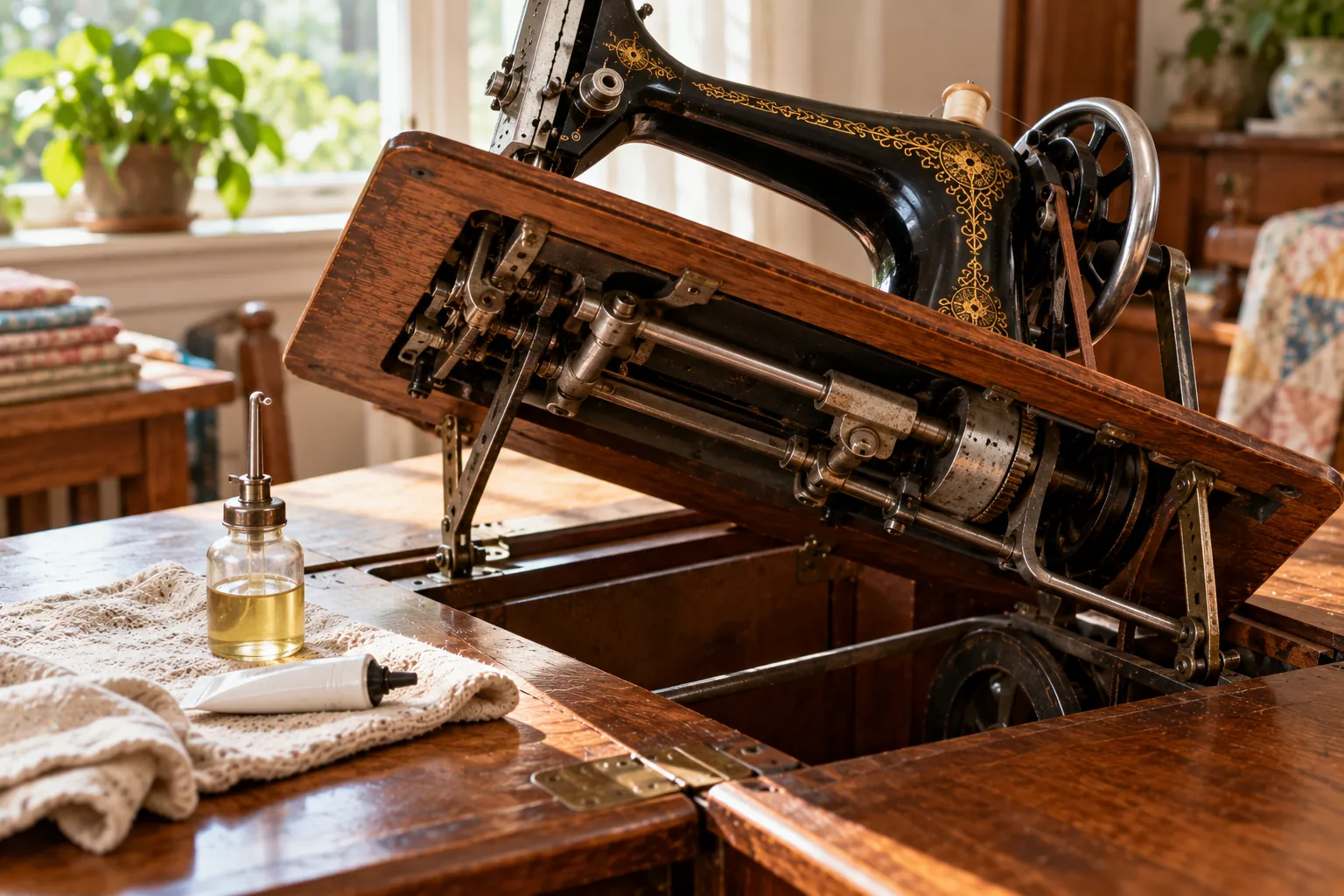
- Potted motors (15-91, 201-2) drive through gears and have no belt.
- Motor code letters: PG on the 15-91, PH on the 201K, BR/BZ/BY on many 66s and 99s.
- Never put oil in a motor; use motor lubricant only where the manual specifies.
- Original pedals are carbon-pile rheostats; keep the original for value.
- Crumbling insulation is a shock and fire risk: rewire first.
TypesWhich motor does your Singer have?
| Motor type | Examples (singersewinginfo codes) | Drive |
|---|---|---|
| Potted (built-in) | PG on the 15-91; PH on the 201K | Gears, no belt |
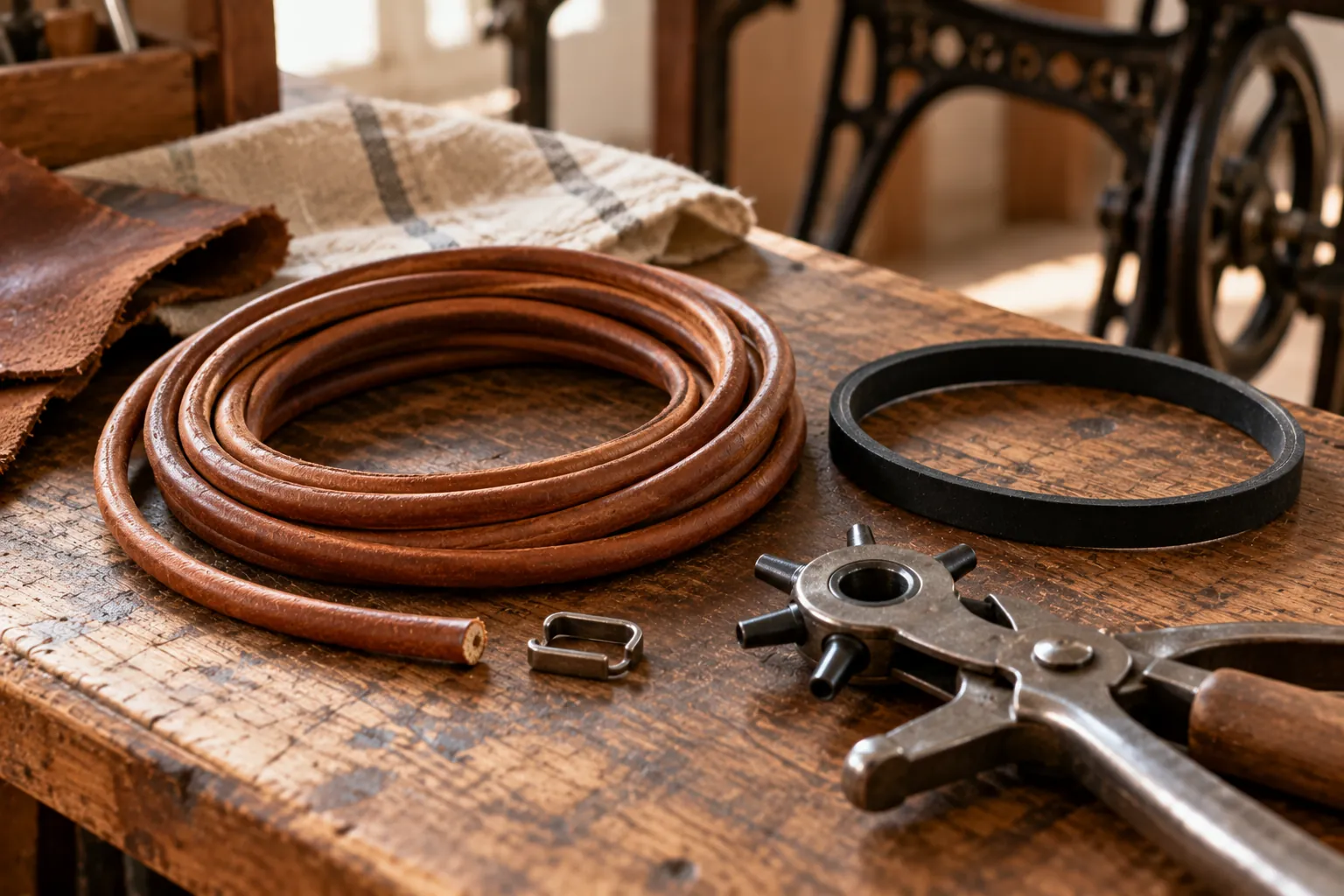
| External, belt-driven | BR, BY, BZ on many 66s and 99s; BA on 99K and 185K | V-belt to handwheel |
| Featherweight motor | Series 3 (US 221), CA6/CA8 (221K, 221J) | Belt |
A third letter K or J in the code shows a Kilbowie or St Johns motor. Wizcrafts warns that a burnt-out 15-91 pod motor can only be replaced with a used one, so don’t overload it.
LubricationDoes the motor need grease or oil?
Never oil. The 66-18 manual says never use oil anywhere on the motor and to refill its two grease tubes every six months with Singer motor lubricant; the 15-90 manual likewise specifies motor lubricant only. Other motors, such as the later 221K’s, need no lubrication at all according to their manuals. Check yours, and see what oil to use.
Foot controlHow vintage Singer foot pedals work
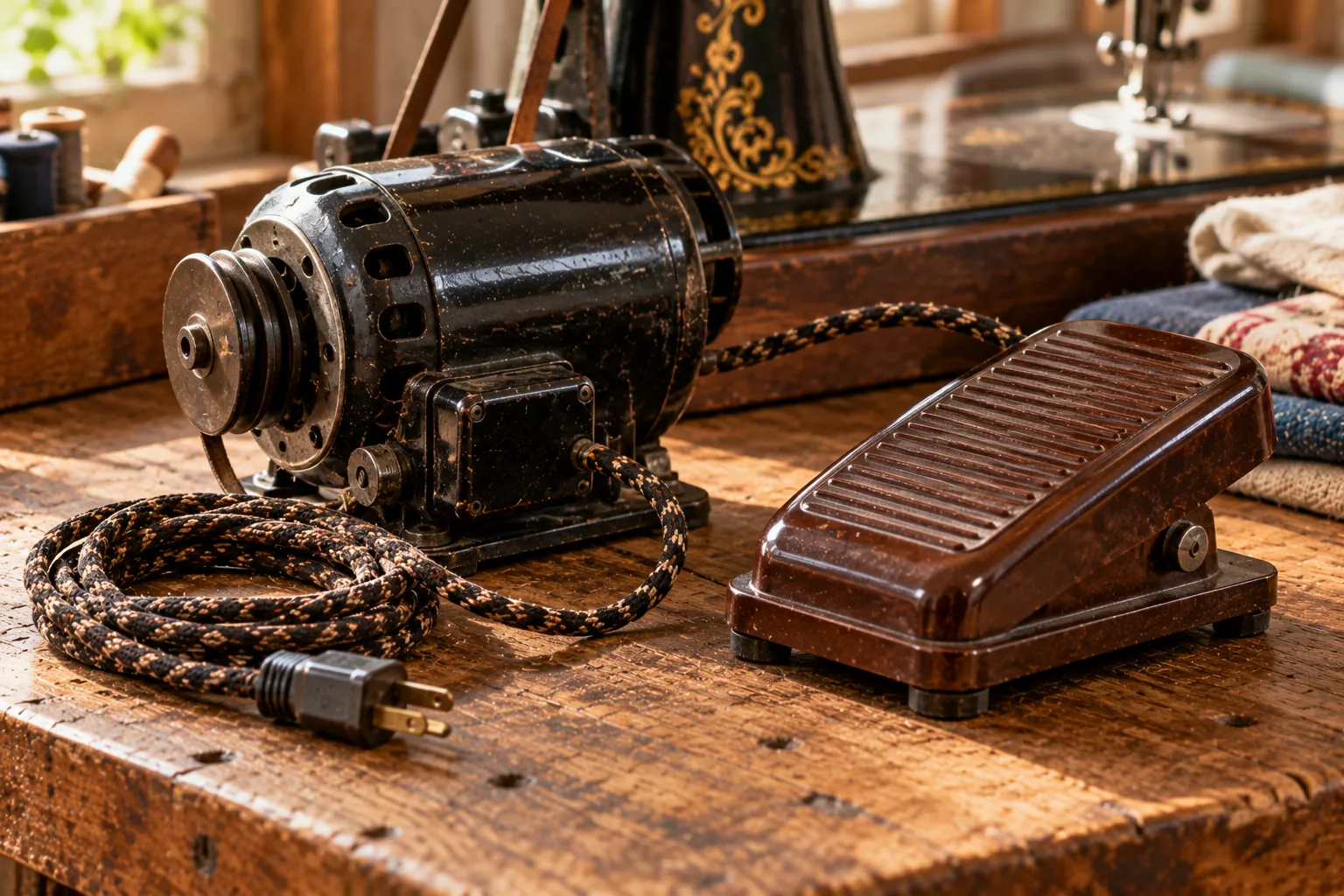
singer-featherweight.com says all original Featherweight foot controllers use a carbon-pile rheostat: pressing the button compresses a stack of carbon discs, lowering resistance and speeding the motor. The common Bakelite button controller is worked by resting your foot on the fixed button and rocking it sideways. These controllers run warm; modern electronic replacements don’t, but keeping the original protects the machine’s value. Knee levers did the same job on many cabinet machines.
SafetyWhen to rewire
Rubber insulation on old motors, lights and controllers hardens and crumbles. If you see cracked cord, exposed wire or brittle insulation at the plug or controller, don’t plug the machine in. Owners often rewire to keep the original Bakelite plug and controller but make them electrically safe. If you aren’t confident with mains wiring, have a technician do it. The 221K manual’s own advice: unplug the machine when it is not in use.
ProblemsMotor runs slowly or hums
- Belt too tight (external motors): slacken it.
- Dry or gummed mechanism: clean and oil; see troubleshooting.
- Worn carbon brushes or a failing controller: a technician can test them.
QuestionsFrequently asked questions
Can I use a modern foot pedal on a vintage Singer?
Yes, electronic replacements are available, but keep the original controller; it adds to the value.
Why does my Singer foot pedal get hot?
Carbon-pile controllers convert unused power to heat. Warm is normal; very hot or smoking is not.
Does a Singer motor need oil?
No. Some take motor lubricant in grease tubes; others need nothing. Never use oil.
Is it safe to use a vintage sewing machine with original wiring?
Only if the insulation is sound. Cracked or crumbling wiring should be replaced first.
ReferencesSources
These are the pages and manuals the facts in this article come from. Where they disagree, we say so in the text.
- singersewinginfo.co.uk/motors
- www.singersewinginfo.co.uk/15
- ismacs.net/singer_sewing_machine_company/model-list/classes-200-299.html
- www.wizcrafts.net/crafts/singer15-91.html
- ismacs.net/singer_sewing_machine_company/manuals/singer-model-66-18-sewing-machine-manual.pdf
- ismacs.net/needlebar/main/manuals/221k/index4.html
- singer-featherweight.com/blogs/schoolhouse/original-featherweight-foot-controllers
- singer-featherweight.com/blogs/schoolhouse/the-design-of-and-how-to-use-the-featherweight-foot-controller
- singer-featherweight.com/blogs/schoolhouse/singer-featherweight-foot-controller-rewiring
- www.quiltingroomwithmel.com/2017/04/how-to-rewire-vintage-singer-sewing.html
Published 24 October 2026 · Written and fact-checked by the HeirloomID editors. Spotted an error? Tell us.