Care

How to use a vintage Singer sewing machine

To use a vintage Singer: check the wiring and oil it, fit a new needle the right way round, wind and insert a bobbin, thread the top with the presser foot up, bring the bobbin thread up, set the stitch length, then lower the foot and sew, guiding the fabric lightly while the feed dogs do the pulling.

By HeirloomID editorsUpdated 24 October 20263 min read6 sources
Hands guiding fabric under the presser foot of a black vintage sewing machine
Illustrative image

Key points

  • Safety and oil first: an unserviced machine sews badly.
  • Always turn the handwheel towards you.
  • Start and stop with the take-up lever at its highest point.
  • Don’t pull or push the fabric; guide it.
  • Reverse is the stitch lever lifted (many models) or a separate lever.

Before you startCheck it’s safe and ready

Check the cord, plug and foot controller for cracked insulation (motors and pedals), then clean and oil (how). Turn the handwheel by hand: it should move freely. Use good-quality thread and two layers of cotton to practise.

StepsSewing your first seam

  1. Needle: fit a new 15x1 needle, flat side the way your manual shows, pushed fully up (needle direction).
  2. Bobbin: wind and insert it (how).
  3. Top thread: thread with the presser foot up and take-up lever high (how).
  4. Bobbin thread up: hold the top thread, turn the handwheel once, pull up the loop; put both threads back under the foot.
  5. Stitch length: set the regulator to a medium stitch (about 10–12 stitches per inch).
  6. Position the fabric under the foot and turn the handwheel to lower the needle into it.
  7. Lower the presser foot.
  8. Sew slowly, pressing the controller gently. Guide, don’t pull: the feed dogs move the fabric.
  9. Reverse a few stitches at each end to lock the seam, if your model has reverse.
  10. Finish with the take-up lever at its highest point, raise the foot and draw the fabric back and away; cut the threads.

TipsTips for old machines

  • Turn the handwheel only towards you; turning it backwards can jam the thread.
  • On treadles, start the wheel by hand in the right direction, then keep a steady rhythm.
  • On a Featherweight, the button controller is rocked sideways with the foot resting on the fixed button.
  • If stitches look wrong, see tension and troubleshooting.

QuestionsFrequently asked questions

Is an old Singer easy to use?

Yes. Straight-stitch Singers have few controls: once you have learned to thread it and insert the bobbin, sewing is simple.

Which way do you turn the handwheel on a Singer?

Towards you (anticlockwise as you look at the wheel from its end).

How do I reverse on a vintage Singer?

On many models, push the stitch-length lever up past zero; some have a separate reverse lever. Very early machines have no reverse.

Why does my fabric not move when I sew?

The presser foot may be up, the stitch length set to zero, or lint packed under the feed dogs.

ReferencesSources

These are the pages and manuals the facts in this article come from. Where they disagree, we say so in the text.

  1. ismacs.net/needlebar/main/manuals/singer201/index2.html
  2. ismacs.net/needlebar/main/manuals/singer201/index3.html
  3. ismacs.net/needlebar/main/manuals/221k/index2.html
  4. ismacs.net/needlebar/main/manuals/221k/index5.html
  5. singer-featherweight.com/blogs/schoolhouse/the-design-of-and-how-to-use-the-featherweight-foot-controller
  6. www.quiltingdaily.com/how-to-adopt-a-vintage-sewing-machine

Published 24 October 2026 · Written and fact-checked by the HeirloomID editors. Spotted an error? Tell us.
Keep reading

More from the blog

An old sewing machine instruction booklet with line drawings, open beside a black vintage sewing machine
Illustrative image

Care · 3 min read

Where to find a vintage Singer sewing machine manual

How to find the right manual for an old Singer: identify the model, then use free sources such as the ISMACS manuals library and Singer’s support site. Plus what the manual tells you about threading, oiling and bobbins.

Read the article
Hands threading the needle of a black vintage sewing machine with a spool on the spool pin
Illustrative image

Care · 3 min read

How to thread a vintage Singer sewing machine

Threading an old Singer: raise the take-up lever, presser foot up, then spool, tension discs, check spring, take-up lever, guides and needle. Which way to thread the needle on the 15-91, 66, 99, 201, 221, 301 and 401A.

Read the article
A small oil bottle and a tube of motor lubricant beside a vintage sewing machine tilted back to show its underside
Illustrative image

Care · 3 min read

What oil to use on a vintage Singer sewing machine

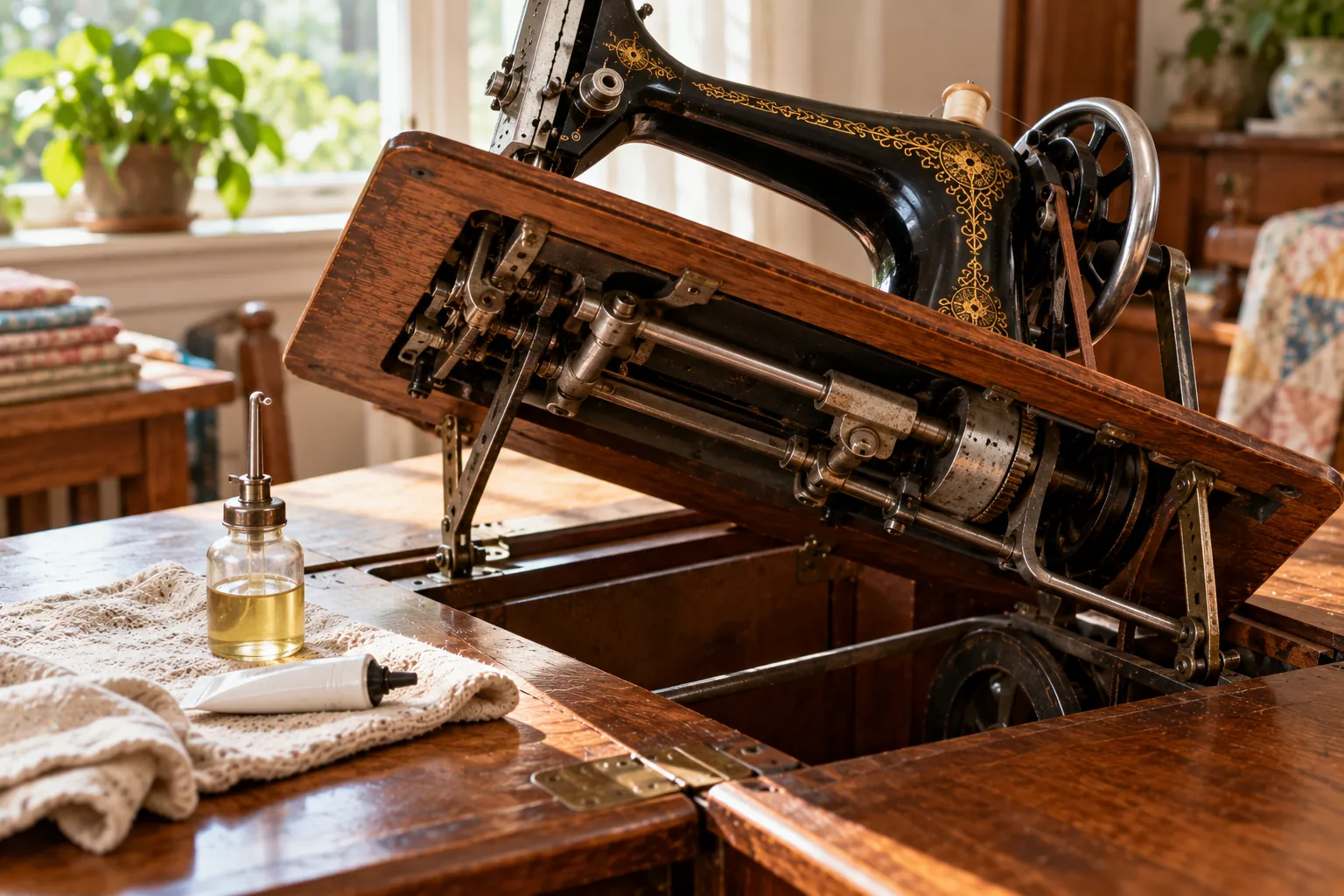
Use clear sewing machine oil on the mechanism and motor lubricant or grease in the motor ports, never oil. Why 3-in-1, WD-40 and motor oil cause trouble, where the oil holes are, and how often to oil.

Read the article
Close-up of sewing machine needles of different sizes on a pincushion
Illustrative image

Care · 3 min read

Which needles fit a vintage Singer sewing machine?

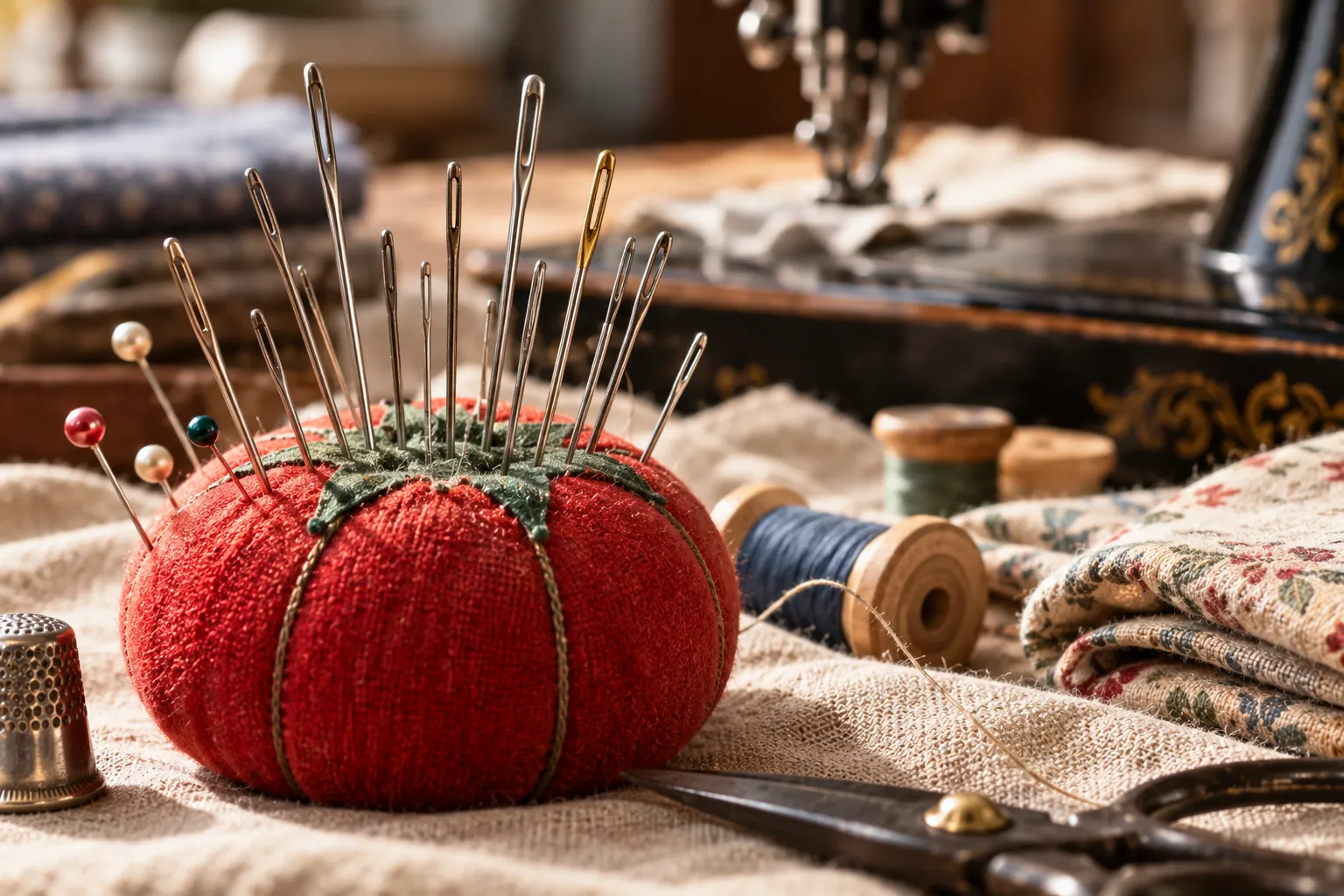
Almost every vintage Singer household machine takes the standard 15x1 needle, sold today as 130/705H or “universal”. Sizes for each fabric, denim and leather needles, and which way the flat side faces on each model.

Read the article
Vintage chrome sewing machine presser feet and attachments laid out beside a green felt-lined box
Illustrative image

Care · 3 min read

Vintage Singer presser feet and attachments

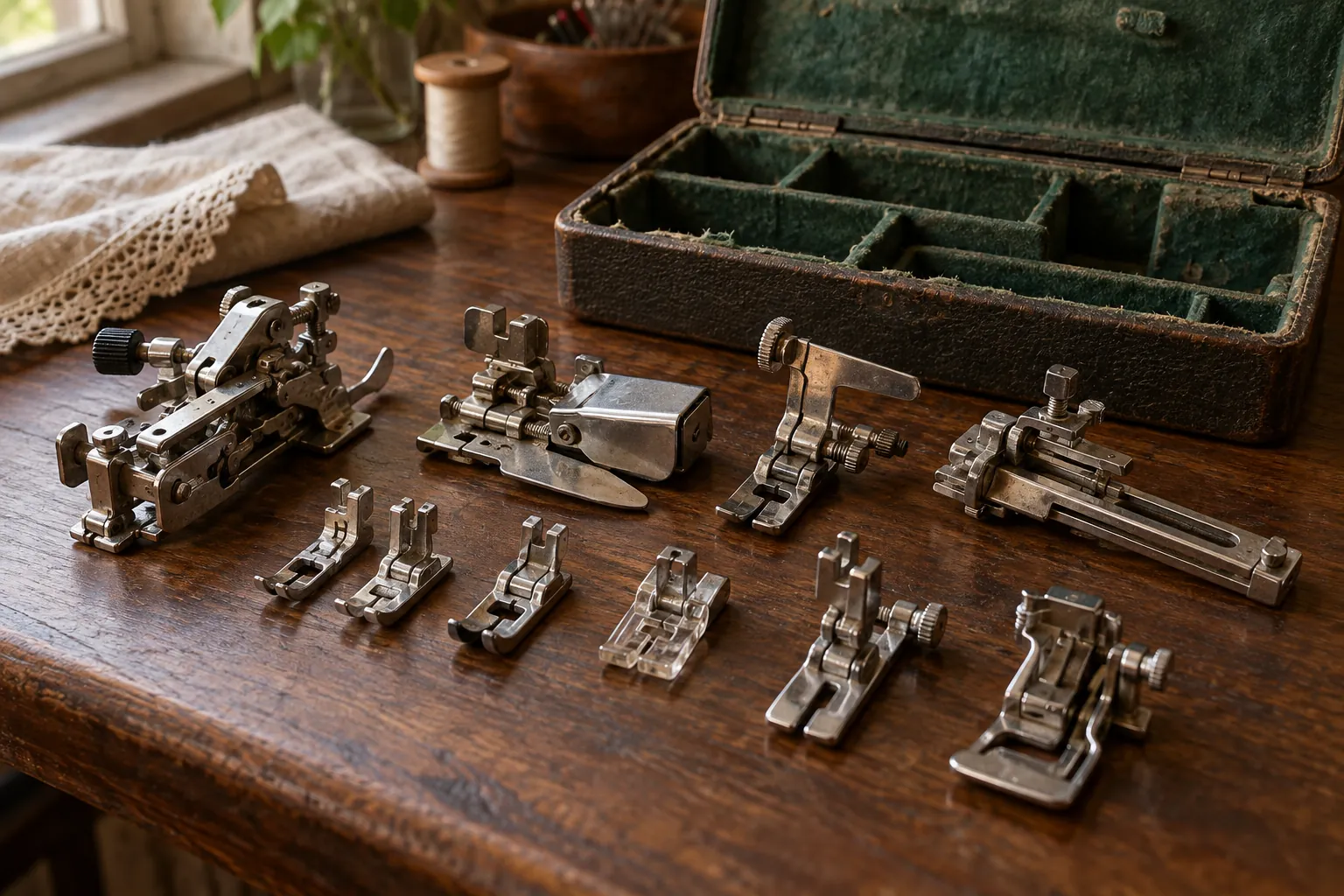
Which presser feet fit your vintage Singer: low shank (15, 66, 99, 201, 221), slant shank (301, 401A, 403A, 404, 500A) or back-clamping (early 66). Types of feet, walking feet, buttonholers and other attachments explained.

Read the article
Close-up of several metal sewing machine bobbins of different shapes beside a bobbin case on linen
Illustrative image

Care · 3 min read

Singer bobbin types: which bobbin fits your vintage Singer?

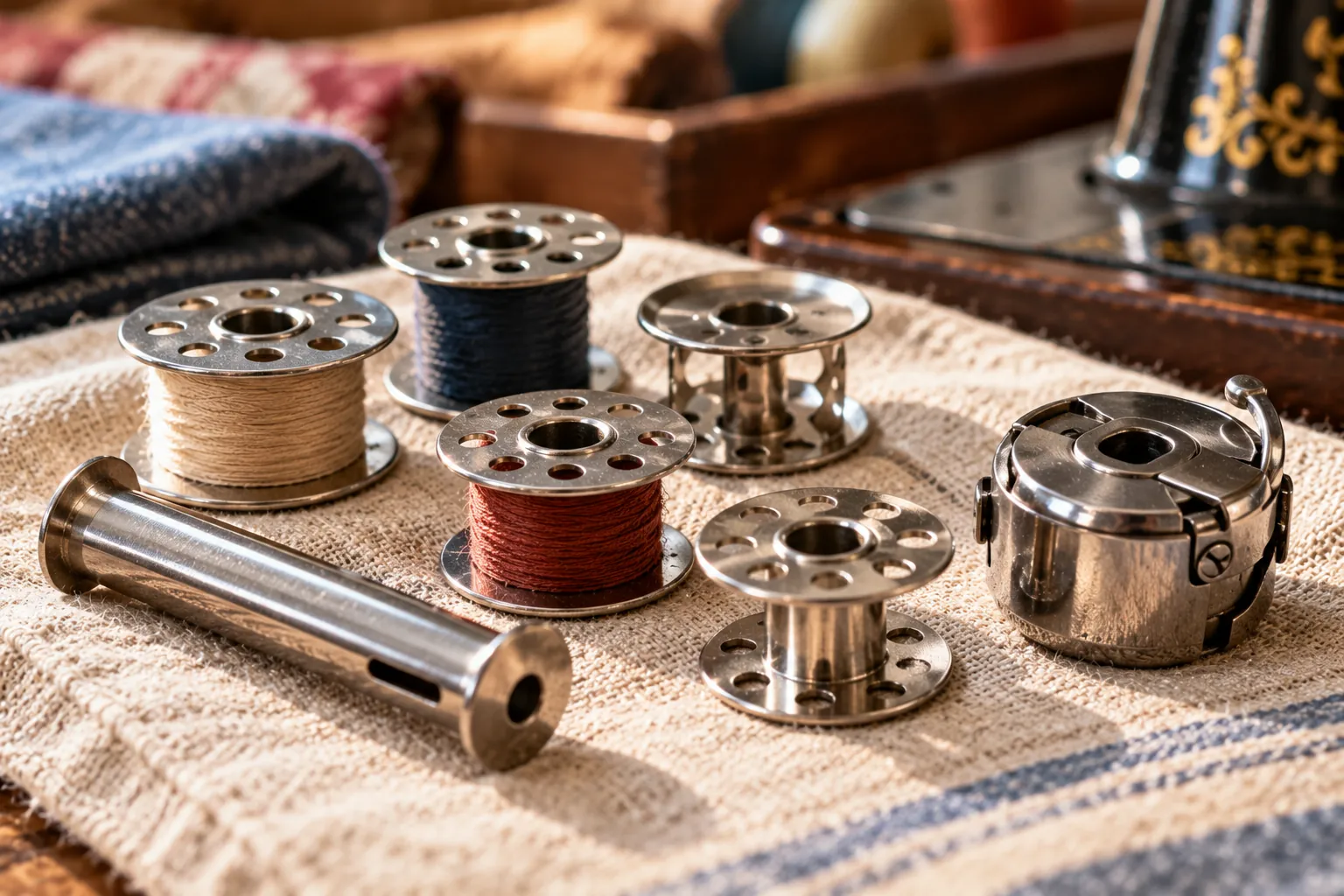
Vintage Singers use four main bobbins: Class 15 (flat sides), Class 66 (domed), the thinner 221/301 bobbin (part 45785) and long shuttle bobbins. A chart of which fits each model, plus bobbin case problems.

Read the article

Date your Singer in seconds

Enter the serial number from the machine bed for the year and factory.