Key points
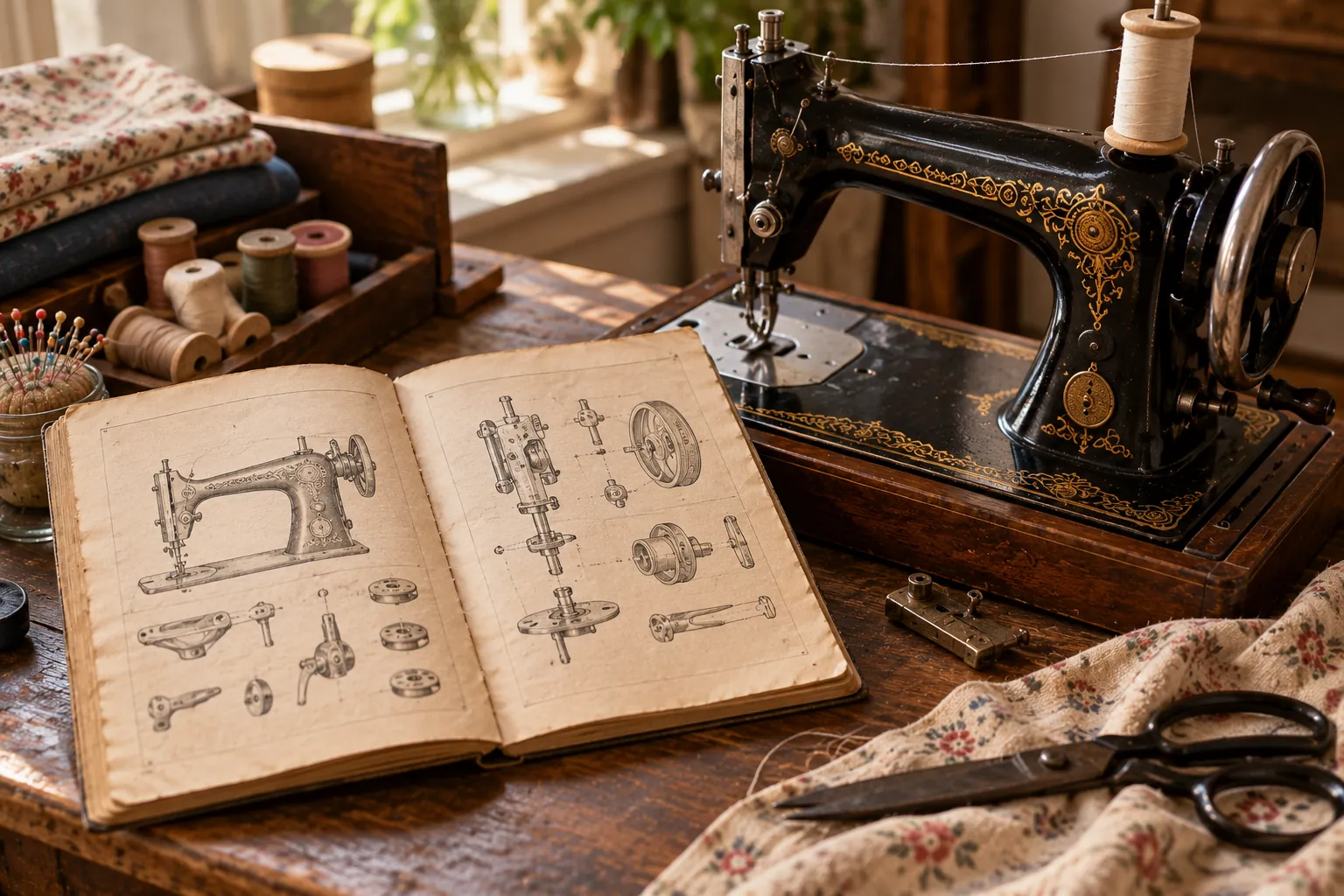
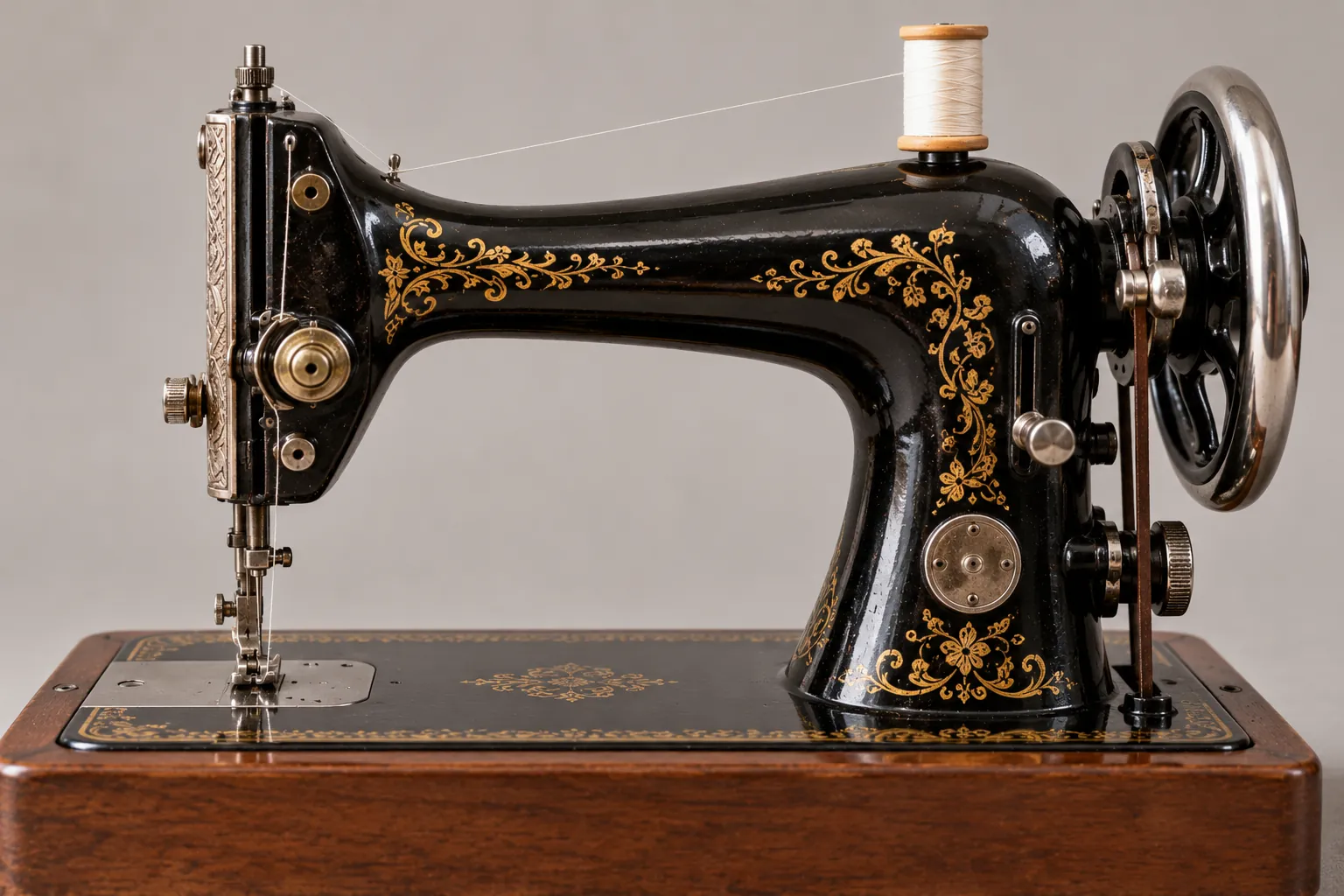
- The arm and bed are the main castings; the pillar joins them.
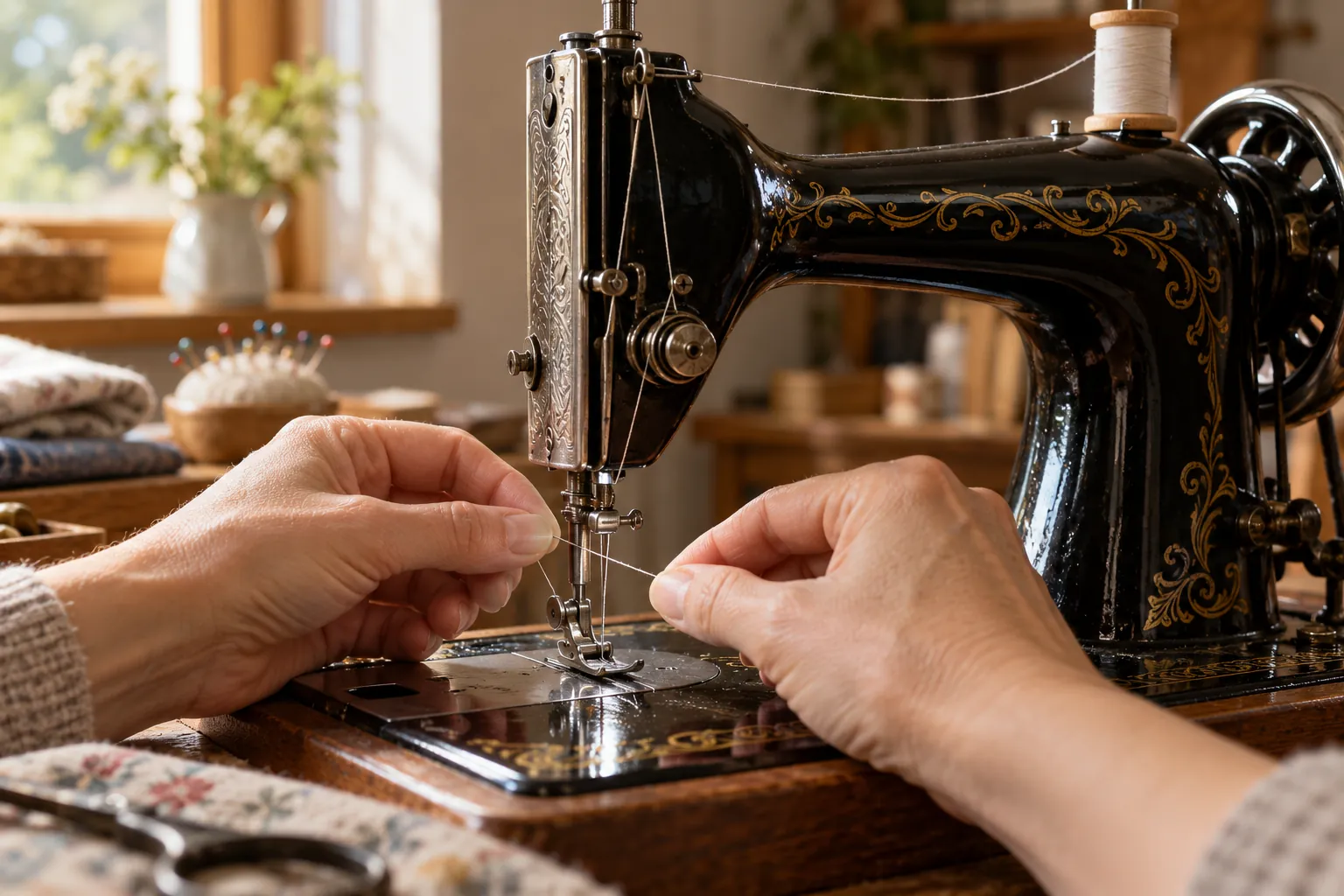
- Upper thread: spool pin, guides, tension discs, check spring, take-up lever, needle.
- Lower thread: bobbin in a case or shuttle, caught by the hook to make the lockstitch.
- Feed: presser foot holds the fabric down; feed dogs move it.
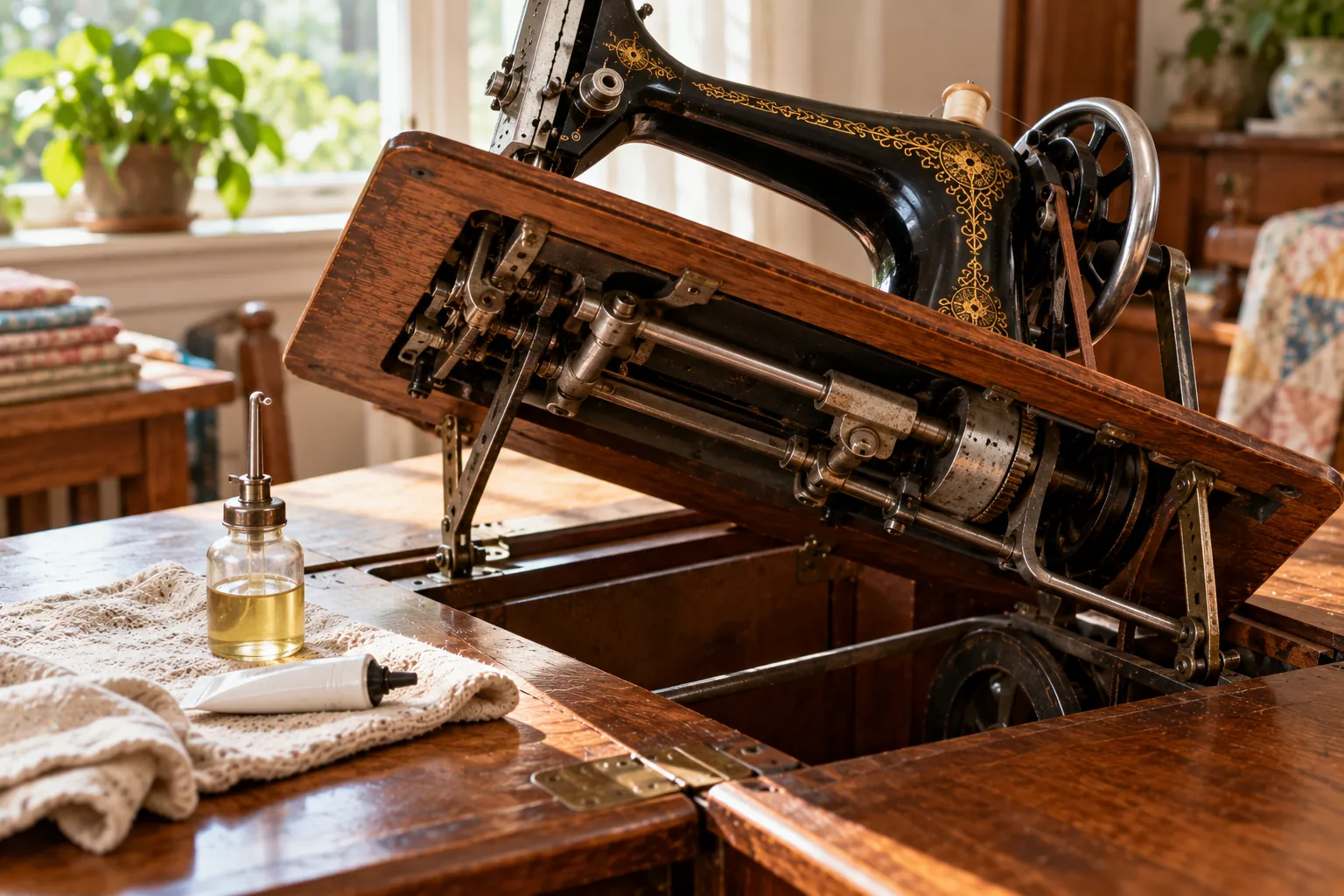
- Drive: handwheel turned by motor, treadle or hand crank.
The bodyMain parts of a sewing machine
| Part | Function |
|---|---|
| Bed | The flat base the fabric rests on; on Singers the serial number is stamped into it |
| Arm | The overhanging upper casting that carries the main shaft |
| Pillar | The upright joining arm and bed (where the 15-91’s potted motor sits) |
| Faceplate | The cover on the left end of the arm, over the needle bar mechanism |
| Handwheel (balance wheel) | Turns the main shaft; always turn it towards you |
| Stop-motion knob | Disconnects the handwheel from the needle for bobbin winding |
| Bobbin winder | Winds thread onto the bobbin from the belt or handwheel |
| Stitch-length regulator | Sets stitch length and, on many models, reverse |
Upper threadThe upper threading parts
- Spool pin: holds the thread.
- Thread guides: lead the thread along the arm.
- Tension discs and dial: grip the thread to control how tightly it is pulled; they open when the presser foot is raised.
- Check (take-up) spring: takes up slack as the stitch forms.
- Take-up lever: pulls thread from the spool and tightens each stitch.
- Needle bar and needle clamp: carry the needle up and down.
- Needle: 15x1 on most vintage Singers (needles).
Lower threadThe bobbin and hook
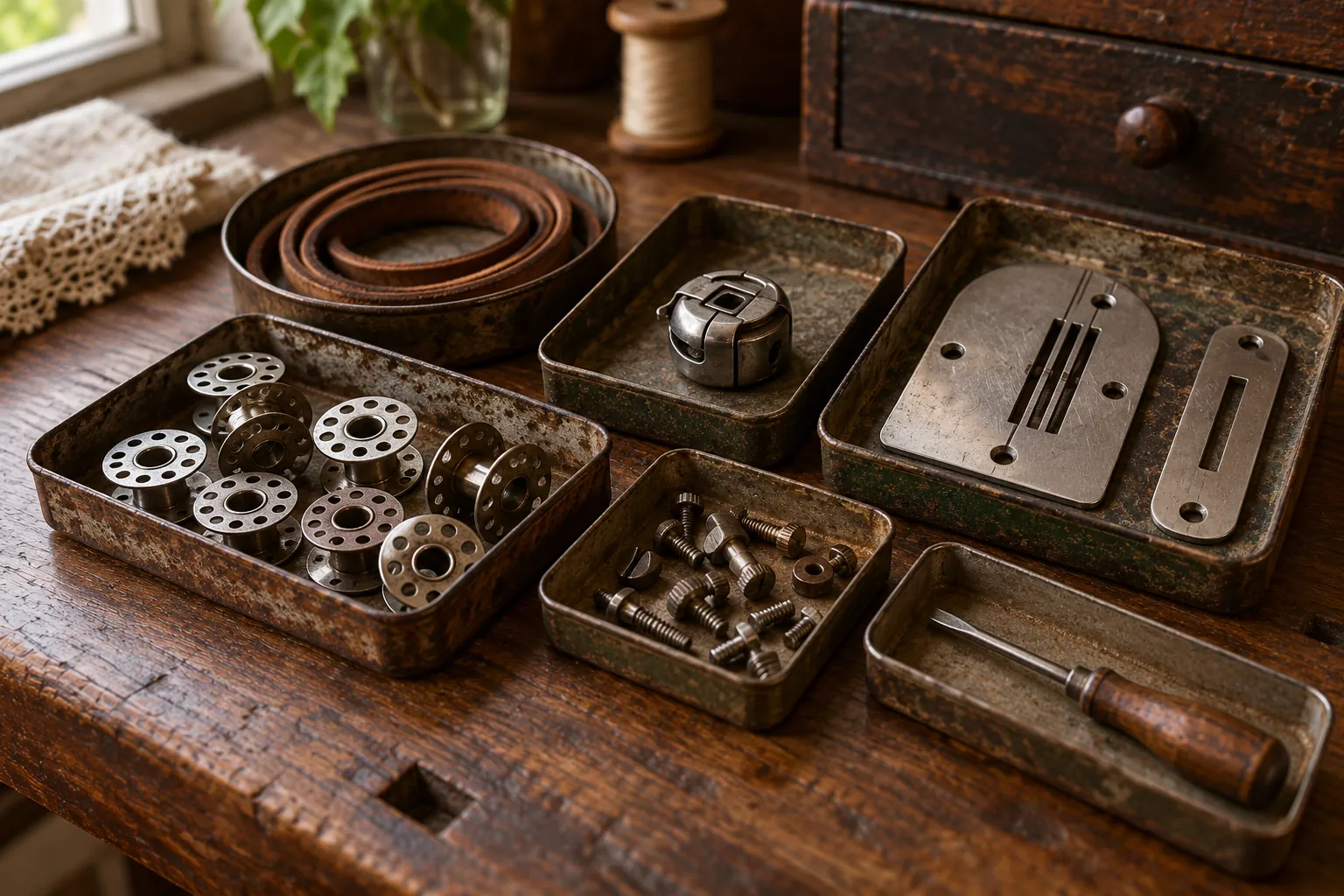
Under the needle plate, the hook (on a 15-91, an oscillating hook; on a 201, a rotary hook; on 27s and 127s, a long vibrating shuttle) catches the upper thread and loops it around the bobbin thread to form the lockstitch. The bobbin sits in a removable bobbin case or a drop-in holder. See bobbin types.
FeedingThe presser foot and feed dogs
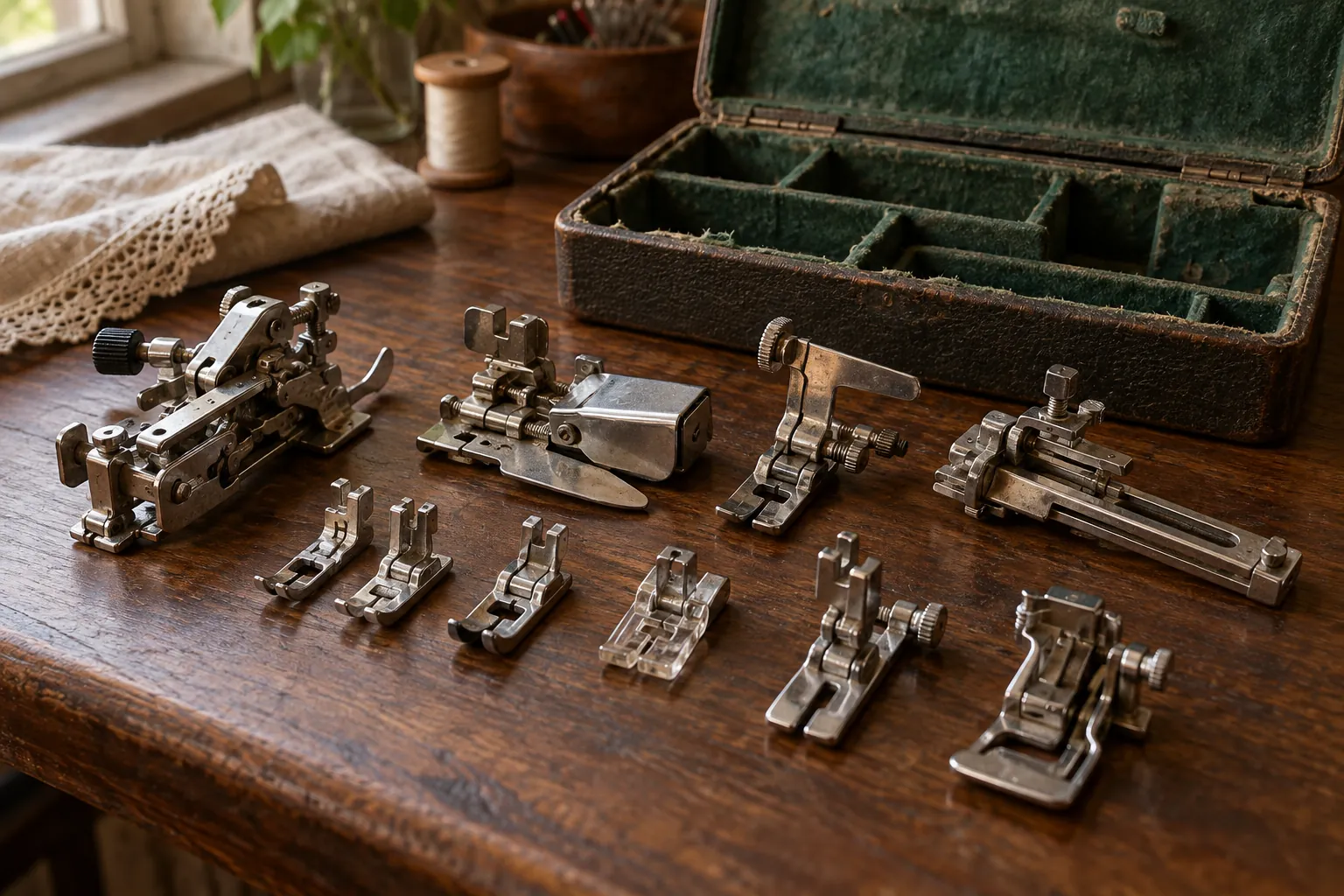
- Presser bar and presser foot: hold the fabric against the feed dogs. The lifter raises the foot; feet fit low, slant or back-clamping shanks (feet).
- Feed dogs: serrated teeth that rise through the needle plate and move the fabric.
- Needle plate (throat plate): the plate the needle passes through; slide plates cover the bobbin.
PowerMotor, treadle and controls
Power comes from an electric motor with a foot controller or knee lever, a treadle and belt, or a hand crank (hand cranks and treadles, motors and pedals). Electric models usually have a sewing light too.
QuestionsFrequently asked questions
What are the main parts of a sewing machine?
Bed, arm, pillar, handwheel, spool pin, tension discs, take-up lever, needle bar, presser foot, feed dogs, needle plate, bobbin and hook or shuttle.
What does the take-up lever do?
It pulls thread through for each stitch and tightens it; it must be threaded and at its highest point when you start.
What do feed dogs do?
They move the fabric under the presser foot by a set amount each stitch.
What is the stop-motion knob?
A knob in the centre of the handwheel that disconnects it from the needle so you can wind a bobbin.
ReferencesSources
These are the pages and manuals the facts in this article come from. Where they disagree, we say so in the text.
- en.wikipedia.org/wiki/Sewing_machine
- en.wikipedia.org/wiki/Presser_foot
- en.wikipedia.org/wiki/Bobbin_driver
- ismacs.net/needlebar/main/manuals/singer201/index2.html
- www.singersewinginfo.co.uk/15
- ismacs.net/singer_sewing_machine_company/model-list/classes-200-299.html
- en.wikipedia.org/wiki/Singer_Model_27_and_127
Published 24 October 2026 · Written and fact-checked by the HeirloomID editors. Spotted an error? Tell us.